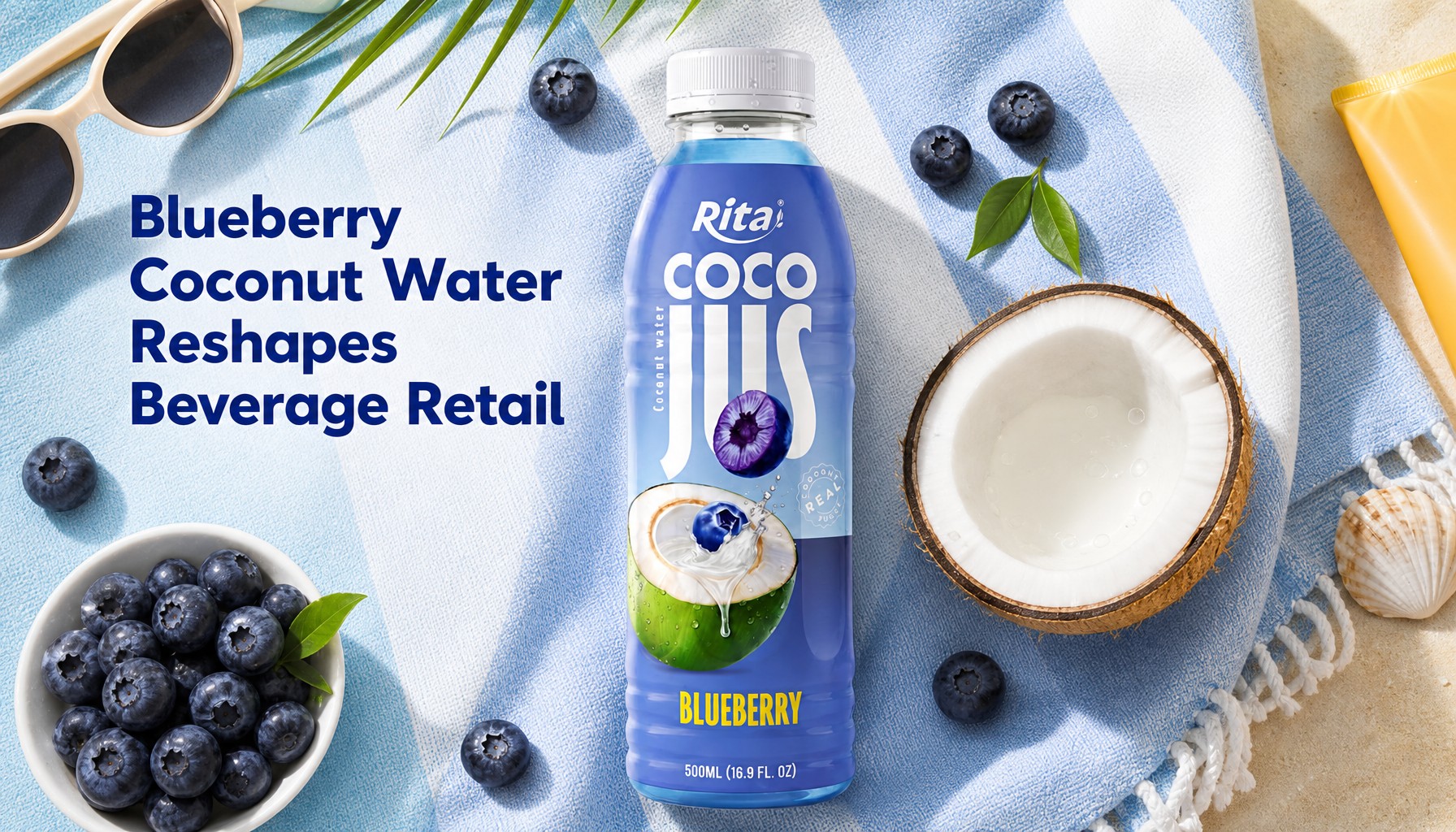
The beverage aisle across the Americas is undergoing a quiet transformation, and the catalyst is a familiar tropical staple paired with a bold berry twist. As retailers from Toronto to São Paulo rethink their chilled shelf strategies, coconut water with blueberry juice has emerged as a standout format that balances familiar refreshment with a distinctly modern profile. The shift is not a fleeting novelty; it reflects deeper changes in how consumers across Canada, Mexico, Brazil, Argentina, Colombia, Chile, Peru, the United States, Ecuador, Venezuela, and Central America approach everyday hydration.
Key Takeaways
- Blueberry-coconut water blends are gaining traction across the Americas as a non-carbonated, shelf-stable refreshment option.
- Retailers favor formats that offer portability, resealability, and strong visual appeal in chilled displays.
- Vietnamese OEM/ODM manufacturers are central to scaling this category for global export markets.
- Private label programs allow regional brands to enter the segment without heavy capital investment.
- Transparent ingredient profiles and consistent formulation are decisive for international buyers.
The Rise of Fusion Hydration in the Americas
The modern consumer is no longer satisfied with a single-note beverage. Across the Americas, buyers are gravitating toward products that layer complementary flavors, and the pairing of real coconut water with tangy blueberry juice fits squarely within this trend.
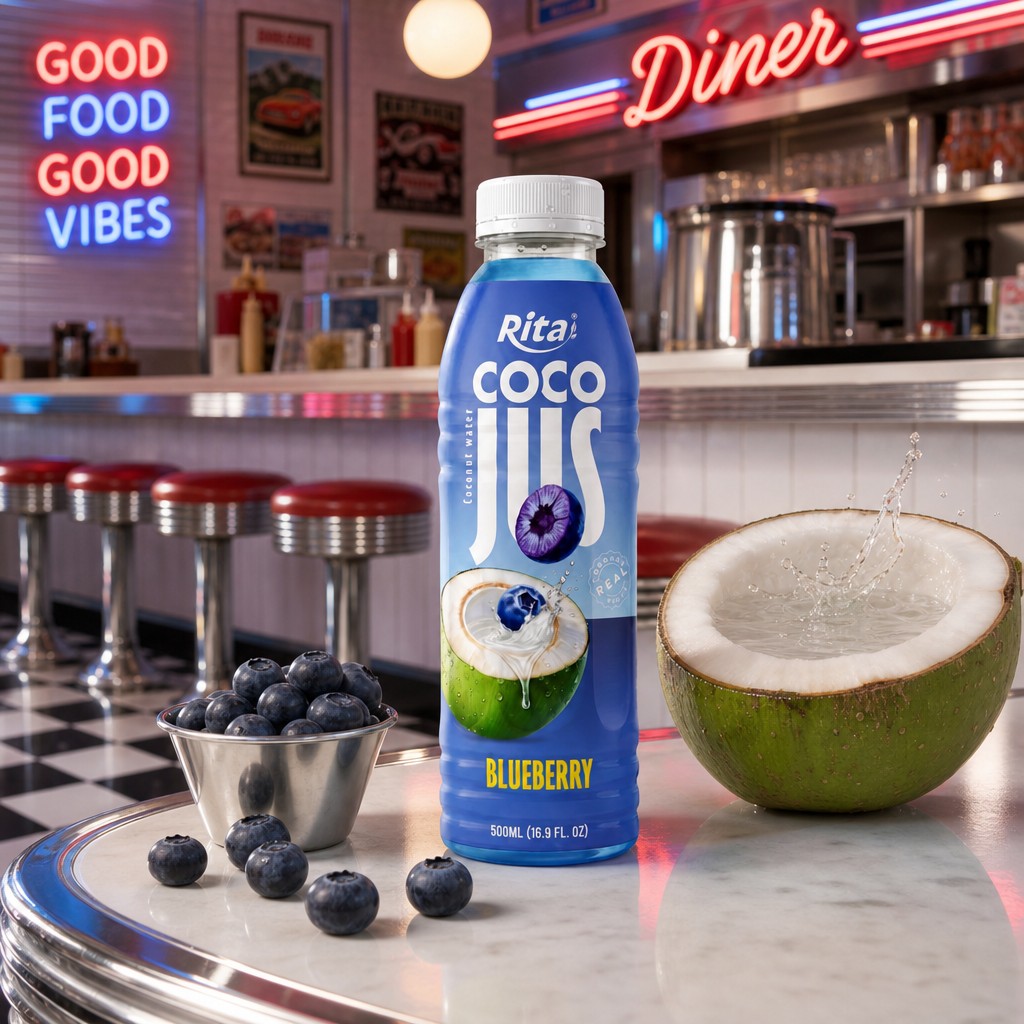
This fusion approach has moved beyond niche health stores into mainstream convenience retail. Retailers in the United States and Canada report growing shelf space dedicated to non-carbonated, fruit-forward drinks that deliver a clean, naturally sweet taste without the heaviness of traditional juices.
Why Blueberry and Coconut Work Together
The combination offers a sensory contrast that keeps consumers engaged. Coconut water brings a subtle, naturally sweet character, while blueberry juice contributes a tangy-sweet depth that rounds out the profile.
For manufacturers, the pairing also offers practical advantages. The flavor profile is stable across production runs, making it well suited for long-distance shipping and consistent retail stocking from Mexico to Chile.
Retail Formats Driving Adoption
Portability remains a decisive factor. A 500ml PET bottle, for instance, offers resealability and easy display, which appeals to both quick-service restaurants and convenience store operators.
The format also supports on-the-go consumption patterns that dominate urban centers across the region, from Bogotá to Buenos Aires.
Innovation in Ingredient Transparency
Today's beverage buyer reads labels with care. Products that list recognizable ingredients such as coconut water, blueberry juice from concentrate, and citric acid tend to build trust faster than opaque formulations.
This transparency is not just a marketing preference; it has become a purchasing criterion for importers and distributors across the Americas.
Formulation Consistency for Export
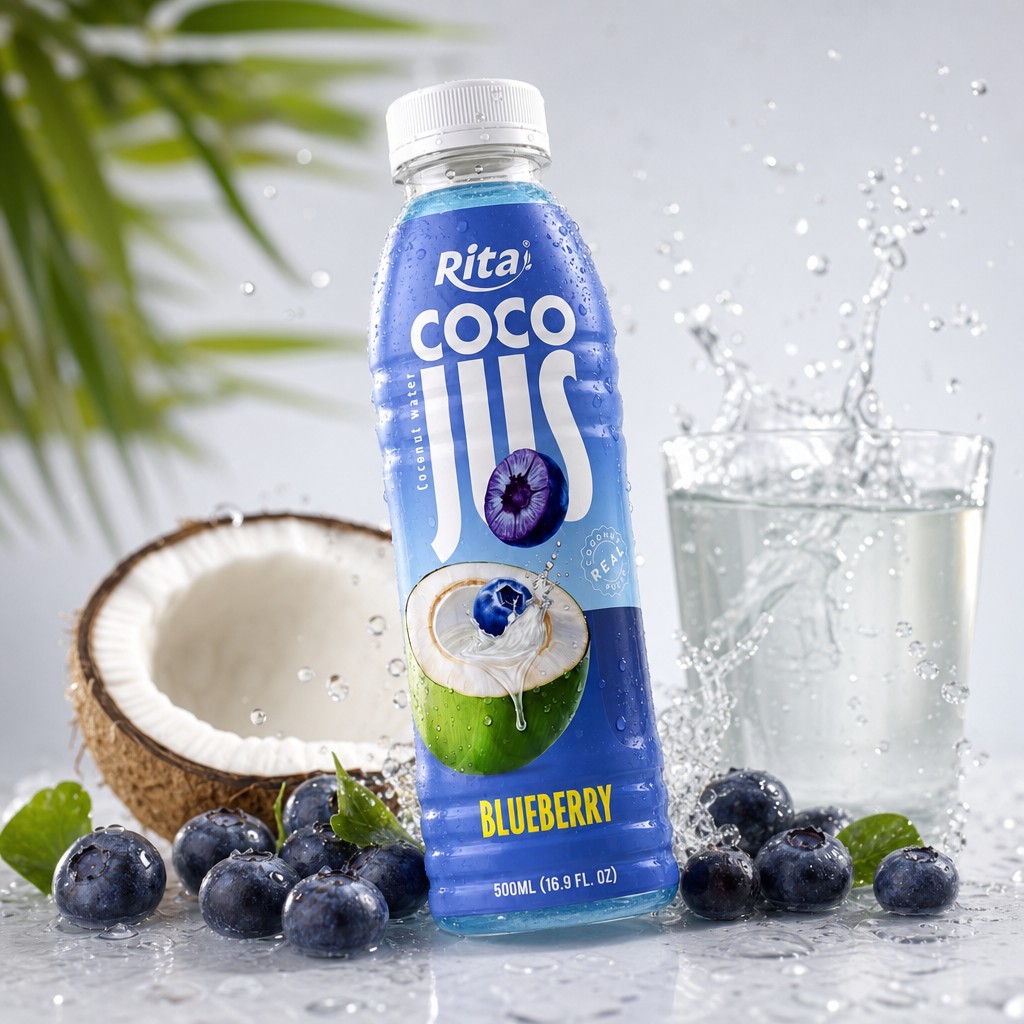
Export markets demand uniformity. A product must taste the same in a Miami warehouse as it does in a Lima distribution center, which requires disciplined production standards.
Key specifications such as pH, Brix, energy content, and potassium levels are documented to give buyers confidence in quality control.
The Role of Stabilizers and Preservatives
For long shelf life and stable shipping, formulations often include preservatives and a small amount of sucralose to balance sweetness without excess sugar.
This approach allows products to maintain an 18-month shelf life, a critical factor for retailers managing inventory across vast geographies.
Manufacturing Scale and Global Export Capability
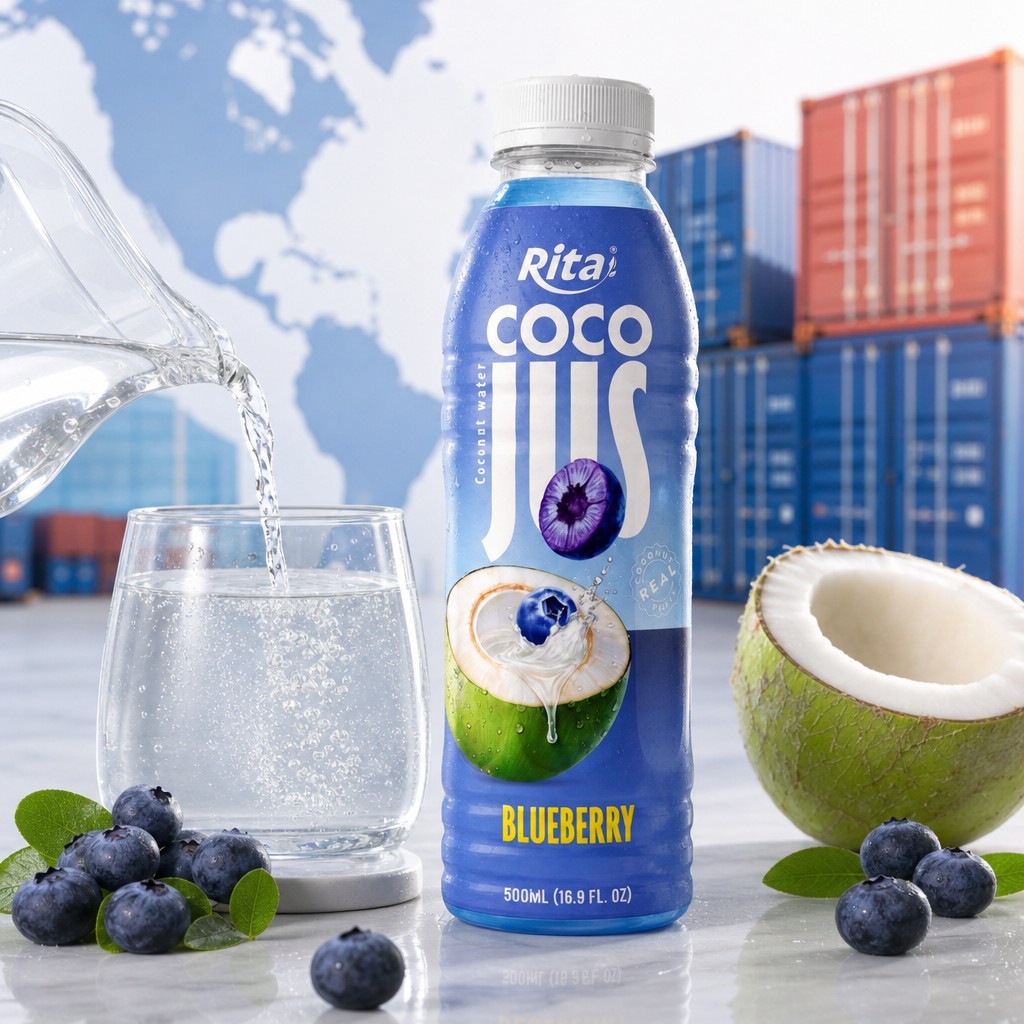
Meeting demand across the Americas requires production capacity that few regional players can match alone. This is where Vietnamese OEM/ODM manufacturers have become indispensable partners.
RITA Food and Drink Co., Ltd., established in 2004, operates 50+ automated production lines and exports over 1,200 containers monthly to more than 200 countries.
OEM and ODM Flexibility
Brands entering the coconut water segment can choose between ready-to-sell stock products or fully customizable private label programs.
This flexibility lowers the barrier to entry for regional distributors who want to launch their own brand without investing in manufacturing infrastructure.
Certifications That Open Doors
International buyers increasingly require recognized certifications. RITA holds BRC, FSSC 22000, Halal, Kosher, ISO, GMP, HACCP, and SMETA credentials.
These certifications streamline market access across the Americas, where retail chains and foodservice operators often mandate supplier compliance.
From Our Orchards: Raw Material Farms
The quality of coconut water begins long before bottling. Vietnam's Ben Tre province is renowned for its coconut plantations, where the fruit is harvested and processed to preserve the clean, naturally sweet character of the water.
For a deeper look at how these plantations supply high-quality raw material, explore the Ben Tre coconut farm story and its journey from plantation to premium products.
Beyond coconuts, the Mekong Delta region supplies a wide range of tropical fruits that support RITA's diverse portfolio. Discover how the Mekong Delta serves as RITA's high-quality raw ingredient area.
https://www.youtube.com/watch?v=I7hlTL3FT_0
Market Landscape and Export Opportunities
The demand for coconut-based beverages continues to expand across North and South America, driven by consumer interest in natural hydration and transparent labels.
Market & Export Overview
Over the 12-month period spanning August 2025 to August 2026, the trade volume of coconut water with blueberry saw substantial growth across all core metrics, driven by expanding market demand and scaled-up supply capacity.
Annual Trend
| Year | Transaction Count | Total Trade Value (USD) | Total Weight (kg) | Total Quantity (units) |
|---|---|---|---|---|
| 2025 | 10 | 110,039 | 47,146 | 31,100 |
| 2026 | 24 | 156,663 | 521,812 | 117,210 |
| YoY Growth | 140% | 42% | 1007% | 277% |
Data source: Tradesparq Trade Data (tradesparq.com)
Top Origin & Destination Countries
| Origin Country | Transaction Count | Trade Value (USD) | Weight (kg) | Quantity (units) | Market Share |
|---|---|---|---|---|---|
| Vietnam | 29 | 266,702 | 402,721 | 122,654 | 85% |
| Malaysia | 2 | 0 | 43,948 | 3,900 | 6% |
| Guatemala | 1 | 0 | 20,671 | 1,977 | 3% |
| Netherlands | 1 | 0 | 92,806 | 19,218 | 3% |
| Taiwan | 1 | 0 | 8,812 | 560 | 3% |
Data source: Tradesparq Trade Data (tradesparq.com)
| Destination Country | Transaction Count | Trade Value (USD) | Weight (kg) | Quantity (units) | Market Share |
|---|---|---|---|---|---|
| United States | 26 | 215,411 | 542,258 | 138,906 | 76% |
| United Arab Emirates | 2 | 4,638 | 0 | 1,040 | 6% |
| Chile | 2 | 15,744 | 0 | 2,253 | 6% |
| Panama | 2 | 3,426 | 26,700 | 601 | 6% |
| Australia | 1 | 49 | 0 | 49 | 3% |
| Vietnam | 1 | 27,434 | 0 | 5,460 | 3% |
Data source: Tradesparq Trade Data (tradesparq.com)
Vietnam is the undisputed leading origin, accounting for 85% of all transactions, 96% of total trade value, and 64% of total trade weight, positioning it as the primary global supplier of coconut water with blueberry. The United States is the largest destination, representing 76% of all transactions, 77% of total trade value, and 86% of total trade weight, underscoring strong demand driven by consumer preferences for healthy, natural beverages.
Emerging regional markets in the United Arab Emirates, Chile, and Panama each account for 6% of transactions, indicating growing demand in Middle Eastern and Latin American markets that may represent untapped growth opportunities for suppliers. The vast majority of transactions (22 out of 34) fall under HS Code 220299, confirming that coconut water with blueberry is the primary focus of trade activity.
For exporters, the Americas represent a fragmented but opportunity-rich market. Each country presents distinct regulatory requirements, packaging preferences, and retail dynamics, yet the underlying demand for quality coconut water products remains consistent.
Navigating Regional Differences
From the United States and Canada to Brazil and Argentina, buyers prioritize different flavor intensities and packaging sizes. A flexible OEM partner can adapt formulations and labeling to meet these local expectations.
Private Label as a Growth Vector
Retail chains across the region are expanding private label beverage lines to differentiate their offerings. This creates a strong opportunity for manufacturers who can deliver consistent quality at scale.
Frequently Asked Questions
What makes blueberry coconut water different from plain coconut water?
The addition of blueberry juice from concentrate introduces a tangy-sweet flavor layer, creating a more complex taste profile while retaining the clean character of coconut water.
Is this product suitable for export to the Americas?
Yes. The 500ml PET format, 18-month shelf life, and international certifications such as BRC and FSSC 22000 make it well suited for export to markets across the Americas.
Can the product be customized for private label programs?
Absolutely. Manufacturers like RITA offer fully customizable private label and OEM programs, allowing brands to tailor packaging, labeling, and formulation to their target market.
What packaging options are available?
The product is available in a 500ml PET bottle, which is portable, resealable, and easy to display in retail and foodservice settings.
How does RITA ensure consistent quality for international buyers?
RITA operates 50+ automated production lines under strict international standards, with documented specifications and certifications that support reliable, repeatable quality.


 No.08, Thong Nhat Boulevard,