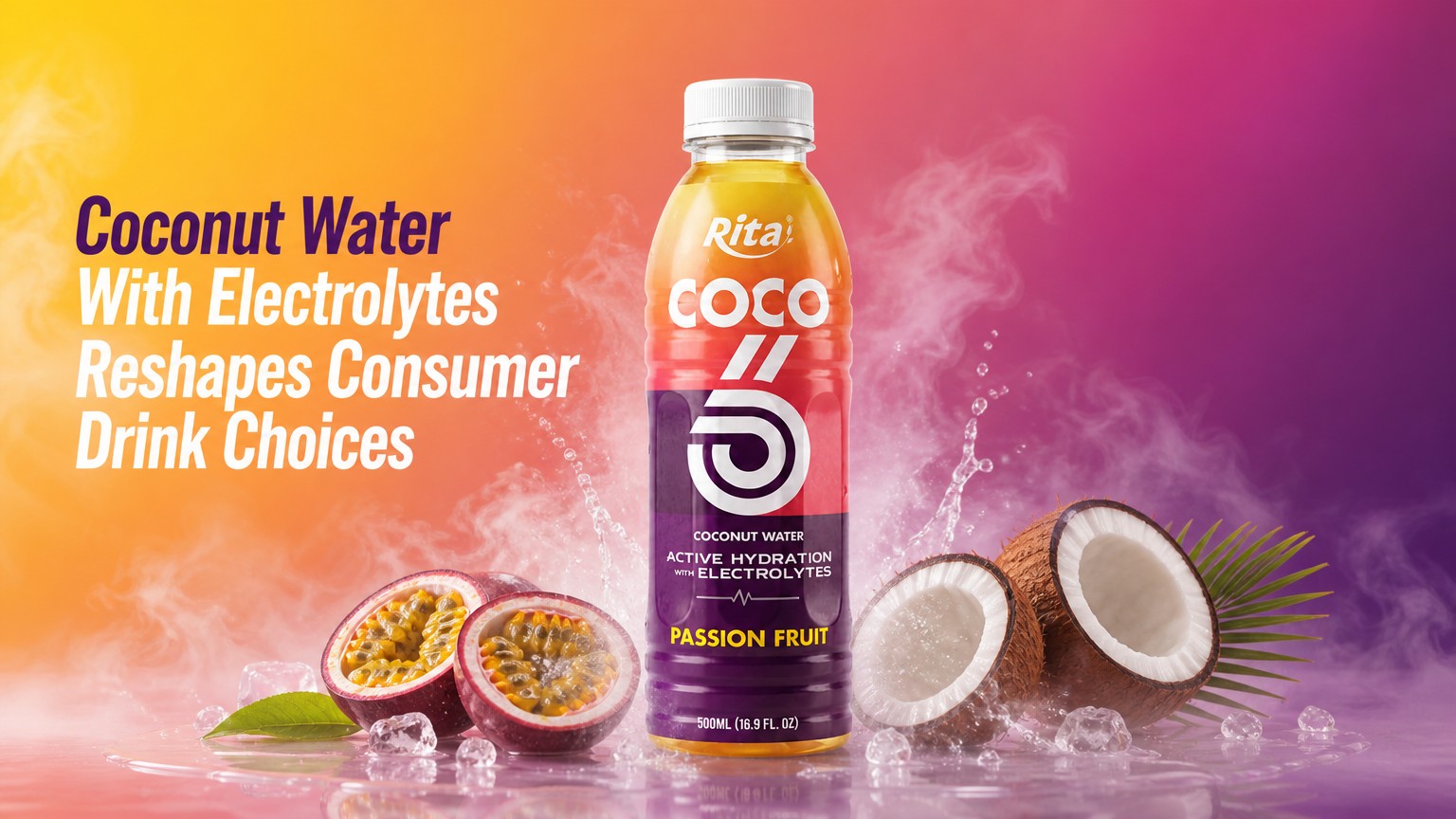
Consumer behavior in the beverage aisle is shifting quickly, and coconut water with electrolytes is one format drawing fresh attention from shoppers across North and South America. Buyers are reading labels more carefully than ever, weighing flavor profiles against formulation details, and gravitating toward drinks that fit busy, active routines. Against that backdrop, RITA Food and Drink Co., Ltd has introduced its 500ml Coconut Water with Electrolytes and Passion Fruit Flavor PET bottle, a product positioned at the intersection of taste appeal and transparent ingredient lists.
Key Takeaways
- Shoppers increasingly compare electrolyte content and sugar levels before selecting a beverage.
- The 500ml PET bottle aligns with on-the-go consumption patterns common across the Americas.
- Passion fruit flavoring differentiates the product within the competitive coconut water segment.
- RITA Food and Drink Co., Ltd holds BRC, FSSC 22000, Halal and Kosher certifications and exports to 200+ countries.
- Private-label and OEM/ODM options make the product attractive to regional distributors.
Why Coconut Water With Electrolytes Appeals to Shoppers
Buying decisions start at the shelf, not in the kitchen. Consumers now reach for bottles that signal specific choices — lower sugar, electrolyte content, or a flavor they recognize.
The shift reflects a broader pattern across the Americas, where shoppers increasingly treat beverages as statements of lifestyle preference rather than simple thirst quenchers. Retail data consistently shows that impulse purchases in the beverage aisle are driven first by packaging and color, then by label claims and flavor descriptions. Brands that understand this sequence can design products that earn attention before the shopper even reads the ingredient list.
Flavor Curiosity Drives Trial
Passion fruit is reshaping shelf preferences in tropical drink categories across the Americas, pushing coconut water brands to innovate on flavor.
Industry observers note that flavor curiosity plays a surprisingly large role in purchase decisions. Passion fruit, long popular in Latin American markets, carries a tangy, aromatic profile that stands apart from the more common lemon-lime and berry flavors dominating store shelves in the United States and Mexico. That distinctiveness gives a product like the 500ml coconut water with electrolytes and passion fruit flavor a natural talking point with consumers who want variety without sacrificing familiarity with coconut-based drinks.
Category data from major beverage consultancies consistently points to growing shelf space for coconut-based drinks in tropical and subtropical markets. Coconut water, once a niche import item, now occupies regular shelf positions in mainstream grocery chains from Canada to Chile. The addition of electrolytes and flavored variants like passion fruit has broadened the audience well beyond the original niche shopper profile.
Label Reading as a Trust Signal
Consumers who read labels expect clarity rather than marketing language, and brands that deliver it earn lasting shelf trust.
Label-reading behavior is reshaping how beverage brands present themselves. When shoppers scan the nutrition panel of this product, they find clear, quantified information: 26 kcal per 100ml, 6.4g carbohydrates, 5.9g sugars, and 151mg of potassium per 100ml. The presence of specific electrolytes — potassium chloride, sodium lactate, calcium chloride, magnesium chloride, and phosphoric acid — is listed plainly rather than hidden behind vague marketing language.
Market researchers have observed that first-time trial often converts to repeat purchase when the flavor profile delivers on its promise. The combination of natural coconut water base with a bright passion fruit top note creates a sensory experience that feels both tropical and refreshing. Consumers who sample the drink during a workout, a commute, or a warm afternoon are more likely to add it to their regular shopping rotation if the taste meets expectations.
Packaging as a Purchase Signal
Shelf appearance often decides the sale before the label is even read, and the 500ml PET bottle is designed with that reality in mind.
The physical bottle itself influences choice. The 500ml PET bottle used for this product features a vibrant color gradient running from yellow through orange and pink to purple, with bold "COCO" typography that makes the product instantly recognizable on a crowded shelf. PET plastic keeps the liquid clear so consumers can see the natural color of the coconut water inside, while the material's durability suits active lifestyles where glass might be impractical. Packaging design, in short, is doing persuasive work before the cap is ever twisted open.
Inside the 500ml Coconut Water With Electrolytes PET Bottle
The formulation pairs a natural coconut water base with a defined electrolyte system and tropical passion fruit flavoring. Every ingredient, from potassium chloride to vitamins B3 and B5, appears plainly on the label.
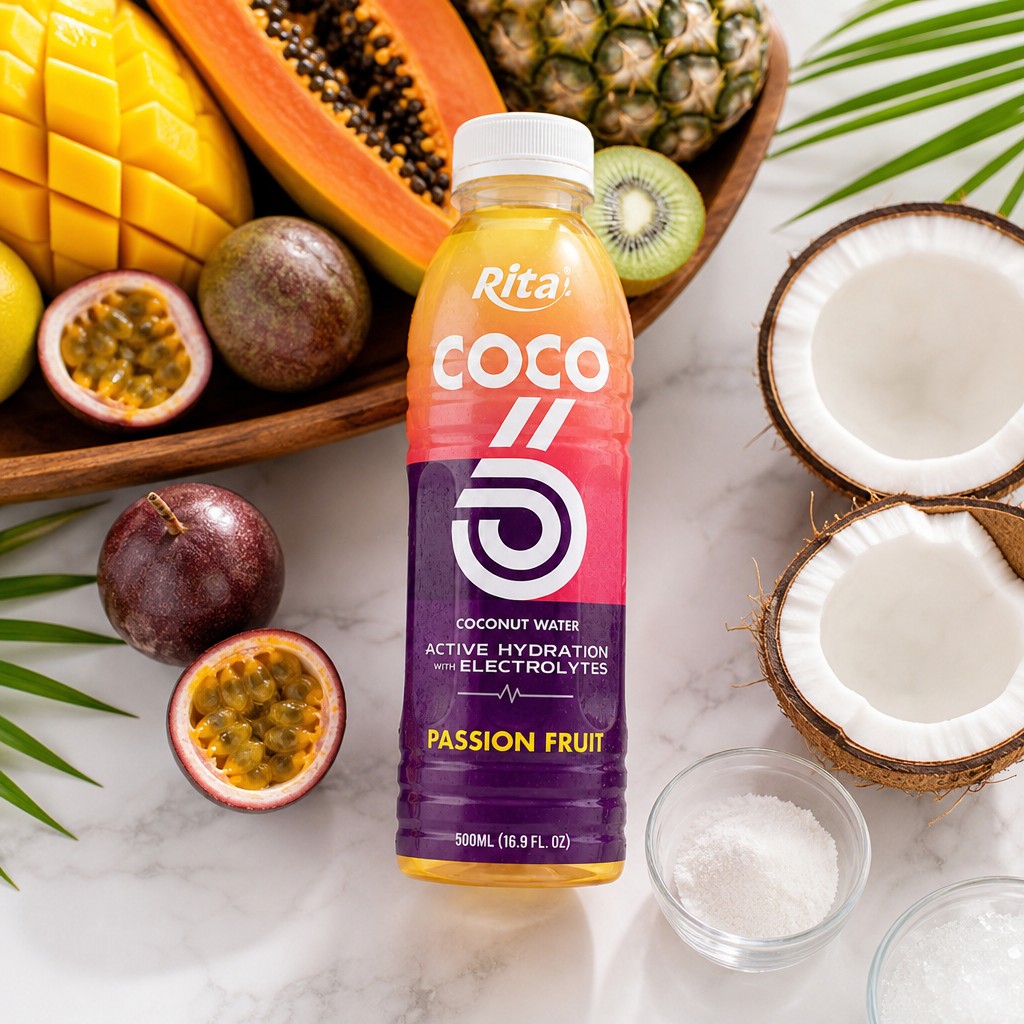
What distinguishes this product in the marketplace is the balance between simplicity and specificity. The ingredient list includes sugar, citric acid, preservatives, sucralose, colors, and vitamins B3 and B5 alongside the core electrolyte compounds. Nothing is masked or euphemized. For distributors evaluating the product, this clarity simplifies the sell-in conversation with retail buyers who are increasingly skeptical of over-engineered formulations. The coconut water with electrolytes category continues to expand as more brands enter the space, and clear labeling becomes a competitive advantage in the beverage market trends reshaping shelf space.
Nutritional Snapshot
A quick look at the per-100ml numbers gives buyers the data they need to position the product correctly:
- Energy: 26 kcal per 100ml
- Carbohydrates: 6.4g, including 5.9g of sugars
- Salt: 0.16g per 100ml
- Potassium: 151mg per 100ml
- Calcium: 22mg per 100ml
- Magnesium: 8mg per 100ml
- Phosphorus: 5mg per 100ml
These figures allow the product to be positioned alongside other electrolyte beverages on retail shelves while carving out its own identity through the coconut water base and passion fruit flavor combination. The complete product listing, including specifications, packaging details, and ordering information for wholesale buyers, is available on the juicevn.com product page.
Size, Format and Distribution Fit
The 500ml size hits the sweet spot for single-serve retail across convenience, sport, and travel channels.
The PET bottle format offers practical advantages for export logistics. At 500ml, the volume sits in the most common single-serve size band across convenience stores, gyms, and airport retail — the exact environments where impulse purchases tend to occur. The gradient label design serves both aesthetic and functional purposes, signaling tropical flavor cues at a distance and helping consumers identify the product family quickly. Retail buyers across Brazil, Colombia, Peru, and Canada have noted that visually distinctive packaging drives first-try rates in categories where consumers are still exploring flavor options.
From Our Orchards: Raw Material Sourcing
The two signature ingredients — coconut water and passion fruit — are sourced through dedicated farming operations that RITA has maintained and inspected over years of supply chain development.
Coconut water for RITA's beverage line is drawn from plantations in Ben Tre, Vietnam's renowned coconut-growing region, where the company maintains direct relationships with growers to ensure consistent raw material quality. The journey from plantation to bottle is documented in detail through the Ben Tre coconut farm account, which traces how raw coconuts move from field to finished beverage.
Passion fruit, the flavor cornerstone of this product, is sourced from gardens in Vietnam's Central Highlands, where sun and soil conditions produce the aromatic, tart fruit that gives the drink its distinctive character. The company's visits to these passion fruit gardens in the Central Highlands illustrate how raw material selection directly shapes the flavor profile consumers experience in the final product.
https://www.youtube.com/watch?v=I7hlTL3FT_0
Export Positioning and Market Reach
RITA Food and Drink Co., Ltd has built one of Vietnam's largest beverage export operations since its founding in 2004.
Today the company supplies brands in more than 180 countries, exporting over 1,200 containers per month from more than 50 automated production lines. Its coconut products portfolio includes a range of coconut-based beverages available in cans, glass bottles, PET and PP formats for both branded and private-label distribution. This scale gives distributors a reliable supply chain partner capable of handling large orders without compromising consistency across batches.
For buyers evaluating sourcing options, the company's certifications — BRC, FSSC 22000, Halal Jakim, Halal HCA-GCC, Kosher, ISO, GMP, HACCP, and SMETA — provide the documentation needed to meet import requirements in major markets. This compliance infrastructure, combined with established shipping routes, gives distributors confidence that the 500ml Coconut Water with Electrolytes PET bottle can move through customs without unexpected delays. Buyers can explore the full range of options through the juicevn.com coconut products catalog.
The broader beverage market continues to evolve at pace. Leadership changes at established distillers, international distribution expansions between major brands, and new investment flowing into emerging drink concepts all signal that the competitive landscape remains unsettled across every category. In that environment, products that combine proven ingredients with clear market positioning — like the passion fruit coconut water blend offered through RITA's export program — are well placed to capture shelf space and repeat orders.
Distributors in the region are also responding to consumer requests for variety. Rather than stocking a single coconut water SKU, many are building multi-flavor sets that let shoppers rotate between options. This bundling strategy supports the coconut water PET bottle segment by making it easier for shoppers to discover their preferred flavor profile.
Looking ahead, the trajectory for coconut water with electrolytes appears tied to continued consumer interest in beverages that offer recognizable ingredients paired with distinctive flavor. Manufacturers that can deliver consistent quality at scale, backed by internationally recognized certifications and flexible packaging options, are best positioned to serve the growing demand from distributors across the Americas and beyond.
Frequently Asked Questions
What electrolytes are included in this coconut water beverage?
The formulation contains potassium chloride, sodium lactate, calcium chloride, magnesium chloride, and phosphoric acid. Per 100ml, the drink provides 151mg potassium, 22mg calcium, 8mg magnesium, and 5mg phosphorus.
What packaging does the product come in?
The beverage is packaged in a 500ml PET bottle with a vibrant gradient label featuring bold "COCO" typography. The PET material maintains clarity and durability suitable for export and retail display.
Is the product available for private-label distribution?
Yes. RITA Food and Drink Co., Ltd offers OEM and ODM services, allowing regional distributors and brands to customize formulations, packaging, and labeling for their target markets.
Which certifications does the manufacturer hold?
The company holds BRC, FSSC 22000, Halal Jakim, Halal HCA-GCC, Kosher, ISO, GMP, HACCP, and SMETA certifications, supporting compliance requirements across major import markets.


 No.08, Thong Nhat Boulevard,