Export Opportunities: Navigating International Markets for Premium Mixed Vegetable and Fruit Drinks
The global beverage landscape is undergoing a significant transformation. As consumer palates evolve and demand for sophisticated, convenient options rises, the export market for non-alcoholic drinks presents a lucrative frontier for manufacturers and distributors. A key segment driving this growth is the premium mixed vegetable and fruit drink category, which aligns with several macro-trends reshaping international trade. This analysis explores the dynamics, challenges, and strategic pathways for businesses looking to capitalize on the export potential of these innovative beverages.
Key Takeaways
- The global demand for premium mixed vegetable and fruit drinks is fueled by cross-cultural culinary trends and the premiumization of the RTD (Ready-to-Drink) segment.
- Successful export strategies require deep understanding of regional regulatory frameworks, labeling laws, and logistical nuances for beverage products.
- Packaging innovation, particularly in formats like sleek cans, is a critical competitive factor in international markets, influencing both shelf appeal and supply chain efficiency.
- Building a strong B2B network with importers and distributors who understand local retail and HORECA channels is essential for market penetration.
- Products that offer a unique taste profile, such as high-percentage blends, can serve as effective market entry points by differentiating from local offerings.
The Global Beverage Shift: Understanding the Demand Drivers
International markets are no longer homogeneous. The rise of global travel, digital media, and expatriate communities has created a consumer base with adventurous tastes. There is a growing appetite for authentic and novel flavor experiences that transcend traditional juice categories.
This is where mixed vegetable and fruit drinks find their strength. They offer a complex, often savory-sweet profile that appeals to consumers seeking more than just a sugary beverage. For importers, this represents an opportunity to introduce a point of differentiation in a crowded market.
The premiumization trend is equally powerful. Consumers worldwide are willing to pay more for products perceived as higher quality, with better ingredients, and superior packaging. This shift moves the category from a basic commodity to a lifestyle or culinary accessory.
Regulatory Navigation: The First Hurdle in Export
Exporting food and beverage products is fundamentally a regulatory exercise. Each market has its own set of rules governed by bodies like the FDA in the U.S., EFSA in Europe, and various national food safety authorities in Asia and the Middle East.
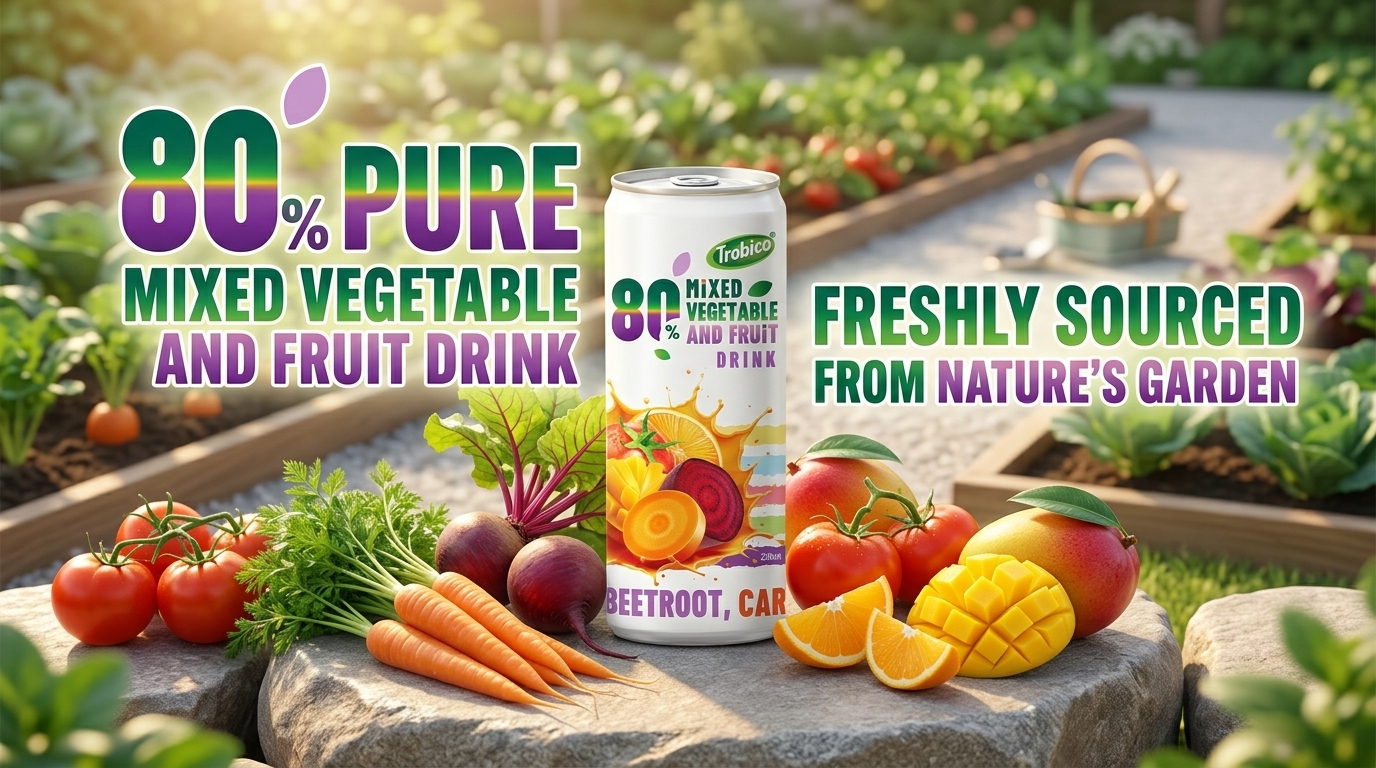
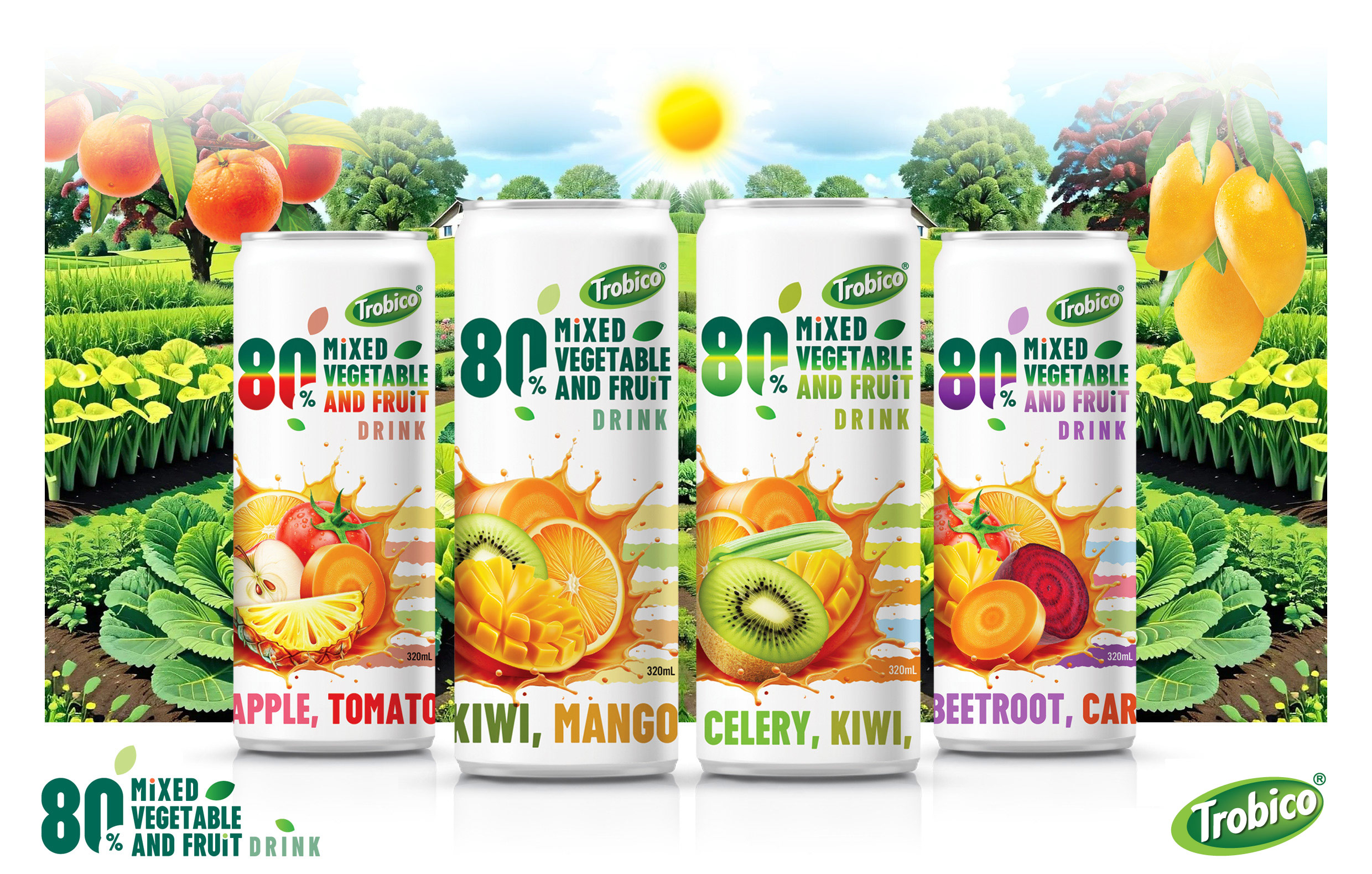
Key considerations include ingredient approval, additive restrictions, permissible claims on labels, and nutritional information formatting. For instance, the term "juice" versus "drink" or "beverage" can have legal implications regarding fruit content. A product like the Trobico 320ml Sleek Can is clearly positioned as an 80% mixed vegetable and fruit drink, which provides transparency that simplifies regulatory alignment in many jurisdictions.
Successful exporters invest in comprehensive compliance checks, often partnering with local legal experts or importers who have established knowledge of the regulatory landscape.
Packaging as a Strategic Export Asset
In export, packaging serves multiple critical functions beyond mere containment. It is a marketing tool, a logistical unit, and a quality preservation system. The trend toward sleek, modern can designs is particularly relevant for international trade.
Cans offer superior protection against light and oxygen, extending shelf life—a crucial factor when considering long shipping times and varied storage conditions. They are also highly stackable and robust, reducing damage rates during transit. The 320ml sleek can format is becoming a global standard for premium single-serve beverages, favored by convenience stores, vending machines, and foodservice venues alike.
For a distributor, choosing a product with export-ready packaging, such as the sleek can format used by brands like Trobico, minimizes logistical headaches and enhances the product's marketability upon arrival. The visual appeal of a well-designed can can communicate premium quality before a single sip is taken.
Building Your B2B Export Network
Market entry is rarely a solo endeavor. Establishing relationships with the right partners is paramount. This network includes freight forwarders specializing in perishable goods, customs brokers, and most importantly, in-country importers and master distributors.
When evaluating potential import partners, look for those with established routes to market. Do they have strong ties to modern retail chains, specialty food stores, or the HORECA sector? A product with a versatile profile can be placed in multiple channels. A mixed vegetable and fruit drink in a sleek can can be sold in supermarkets, offered as a premium non-alcoholic option in restaurants, or stocked in hotel minibars.
The role of trade shows and B2B digital platforms cannot be overstated. These venues are where relationships are forged, and product samples, like those from a brand's production lines, can make a tangible impression on potential buyers.
Case in Point: The Role of Production Line Credibility
For international B2B buyers, proof of manufacturing capability and consistency is a key decision factor. They are not just buying a container of product; they are investing in a reliable supply chain. Information about a product's origin on modern, high-capacity production lines is a significant trust signal.
It assures the buyer of scalable supply, consistent quality, and adherence to international food safety standards (e.g., ISO, HACCP, GMP). When a brand like Trobico, under the umbrella of an established manufacturer like RITA, highlights its production lines, it speaks directly to the concerns of a professional importer. This operational transparency is as important as the product's taste profile in securing long-term export contracts.
Identifying High-Potential Export Markets
While opportunities exist globally, certain regions show accelerated demand for innovative beverages. Southeast Asia, with its growing middle class and openness to new trends, is a prime target. The Middle East has a strong market for premium imported goods and non-alcoholic options. In Western markets, there is sustained interest in ethnic and fusion flavors.
Market selection should be strategic. Analyze competition, import tariffs, local beverage consumption habits, and distribution channel maturity. Sometimes, a niche approach—targeting specific metropolitan areas or retail chains known for curating international products—can be more effective than a broad national launch.
Offering a product that combines familiar elements (fruit) with novel twists (vegetable blends) lowers the barrier to trial. It provides a familiar entry point with a distinctive finish, making it a safer yet innovative choice for importers to bet on.
Conclusion: The Future is in Blended Exports
The export journey for beverage brands is complex but richly rewarding. The convergence of global taste trends, smart packaging, and robust production capabilities creates a perfect storm of opportunity for premium mixed vegetable and fruit drinks. Success hinges on a dual focus: uncompromising compliance and logistics excellence, paired with a product that tells a compelling story of flavor and quality.
For importers and distributors, the strategic inclusion of such products in their portfolio allows them to cater to evolving consumer demand and capture higher margins in the value-added beverage segment. As the global marketplace becomes more connected, the beverages that travel best will be those that offer a genuine and well-executed point of difference.
Frequently Asked Questions
What are the key documents required to import mixed vegetable and fruit drinks?
Typically, you will need a commercial invoice, packing list, bill of lading/airway bill, certificate of origin, and a health certificate or certificate of free sale from the manufacturer. Specific import permits and lab analysis reports confirming compliance with local food standards are also commonly required. Always consult with the destination country's import authority.
How does can packaging benefit the export process compared to bottles?
Cans are generally lighter and more robust than glass bottles, reducing shipping costs and breakage risks. They provide a complete barrier to light and air, better preserving flavor and extending shelf life without the need for refrigeration during transit. Their uniform shape also maximizes container space utilization.
What should a distributor look for when vetting a new beverage brand for import?
Focus on the manufacturer's certifications (e.g., HACCP, ISO 22000), scalability of production, consistency of supply, and flexibility in meeting minimum order quantities. Review their compliance documentation for your target market. Finally, assess the brand's uniqueness and alignment with local trends to ensure market viability.
Are there specific logistics considerations for shipping beverage products?
Yes. Temperature control may be necessary in extreme climates to prevent flavor degradation. Insurance should cover spoilage or damage. It's crucial to work with a freight forwarder experienced in F&B products who understands customs clearance procedures for foodstuffs, including potential inspections.



 No.08, Thong Nhat Boulevard,