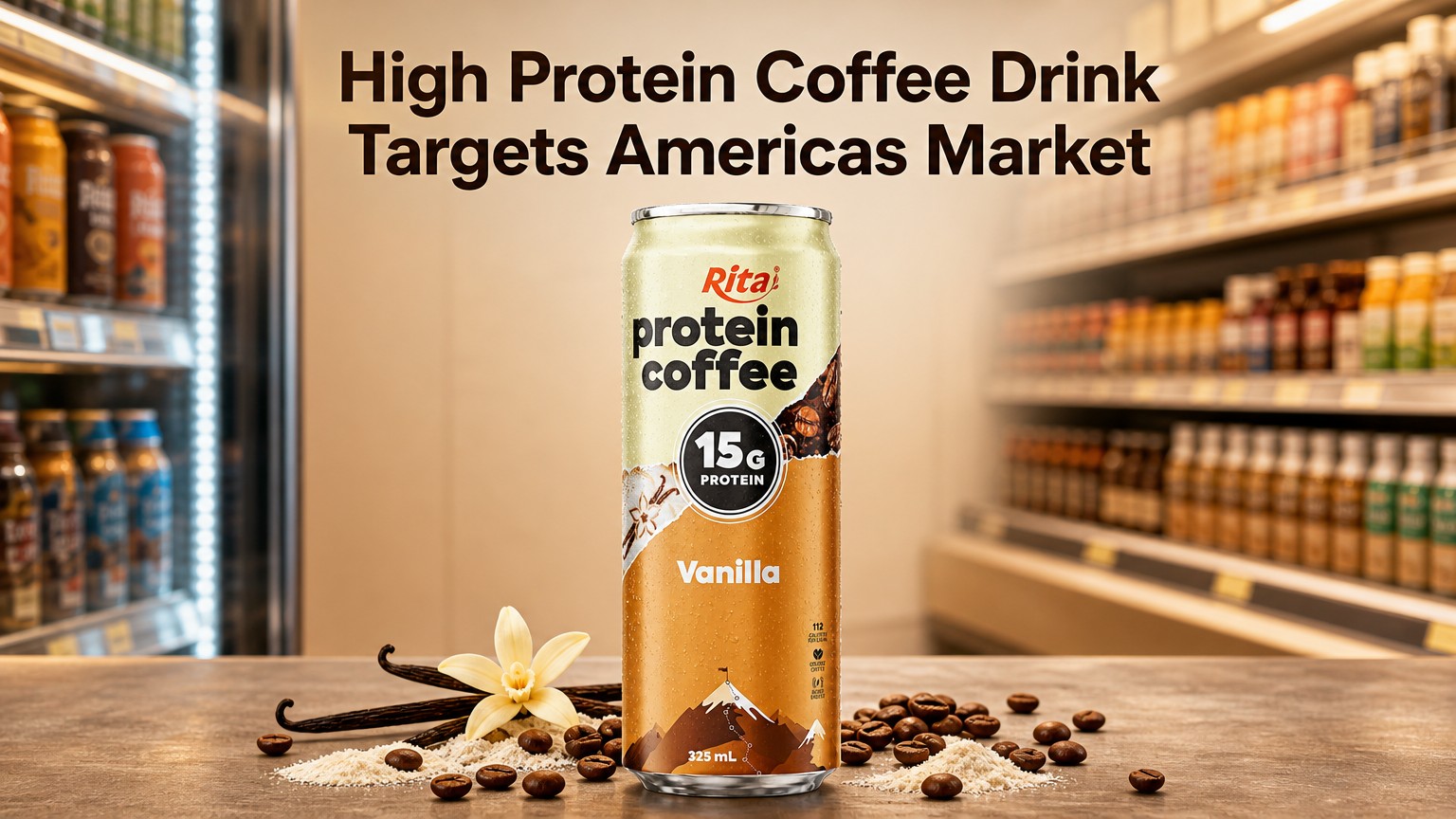
The ready-to-drink coffee aisle across North and Latin America is being redrawed by one shopper priority: more protein in the formats people already reach for. Into that gap steps the high protein coffee drink from RITA, a 325 ml aluminum can of vanilla latte-style coffee carrying 15 g of protein per serving and built for export from Vietnam to retailers in Canada, the United States, Mexico, Brazil, Colombia, Chile, Peru, Ecuador and Central America.
Key Takeaways
- 15 g of protein per serving, 183 kcal, 62 mg caffeine and 11.4 g of total sugars in one 325 ml can.
- Vanilla latte profile built from whole milk powder, milk protein concentrate and instant coffee powder.
- Up to 24 months of shelf life, a decisive factor for long-haul export and distributed inventory.
- Produced by RITA Food and Drink Co., Ltd, a Vietnamese OEM/ODM manufacturer supplying brands in more than 180 countries.
- Packaging designed for standout on chilled shelves from Canadian convenience chains to South American supermarkets.
High Protein Coffee Drink Demand Accelerates Across the Americas
Protein has moved out of the supplement aisle and onto the coffee shelf. Shoppers now read the protein figure on a ready-to-drink can before they read the roast description.
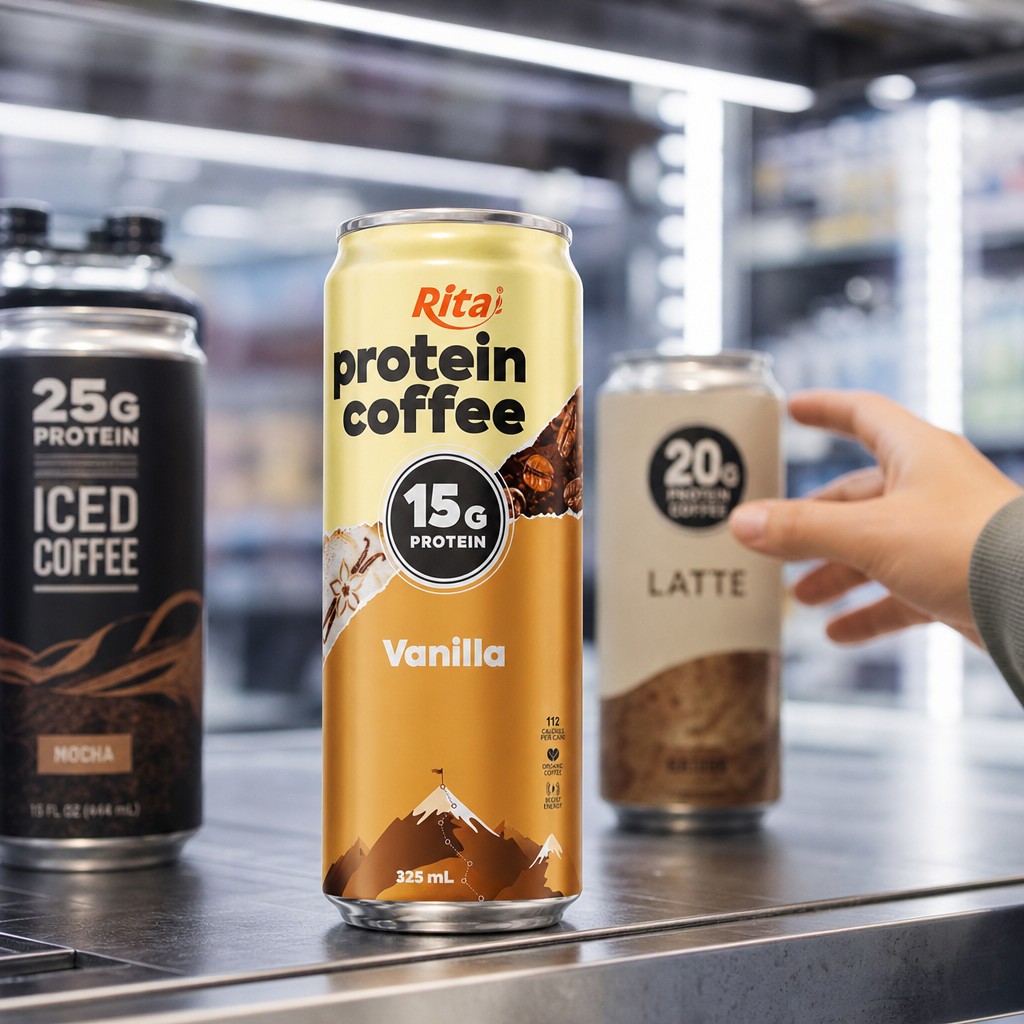
That change in reading order is reshaping how buyers allocate cold-case space. Convenience operators report that protein-labelled cans sit alongside premium coffee rather than standard lattes, and category managers in the United States and Mexico increasingly treat protein content as a filter when reviewing new listings. The specification has become an entry ticket rather than a bonus. For a manufacturer, the practical implication is simple: the label has to answer the shopper's first question before it is asked.
What shoppers compare before they buy
Across the Americas the comparison set on a chilled shelf is remarkably consistent. A shopper standing in front of three or four cans weighs the same attributes in roughly the same order:
- Protein grams per can, read first and used as the primary differentiator.
- Calorie and sugar figures, checked immediately after the protein number.
- Caffeine level, for shoppers managing their daily intake pattern.
- Flavor name, where vanilla and caramel variants outperform unfamiliar profiles.
- Can size, since 325 ml fits the single-serve chilled segment without a price jump.
- Printed shelf life, relevant for independent retailers with slower turns.
Nothing on that list is exotic. The advantage goes to whoever presents the numbers most clearly, and the high protein coffee drink category rewards that clarity above almost everything else.
Where vanilla sits in the flavor mix
Vanilla is the safest entry point for a new coffee SKU in export markets. It reads as familiar on a shelf in Bogotá or Toronto, it sits comfortably beside the roasted profile of instant coffee without masking it, and it appeals to drinkers who prefer a gentler sweetness to mocha or hazelnut variants. In the Rita formulation, whole milk powder and milk protein concentrate give the vanilla note a rounded, creamy body rather than a thin sugary edge.
That texture is a commercial detail, not a tasting note. A can that finishes smoothly gets repurchased; a can that tastes chalky or overly sweet gets left half-empty and never reordered. Flavor testing before launch is therefore as important as the protein specification itself, particularly when the first people to taste the product are buyers who do not normally buy protein beverages.
Regional variation still matters. Chilean and Peruvian shoppers tend toward lighter roast profiles, while Brazilian and Colombian buyers expect a stronger coffee character even in a sweetened format. A single vanilla SKU can cover most of that range, which is one reason exporters favour it as the opening flavor of a multi-SKU launch.
The wider industry is making the same bet on familiar formats. Shepherd Neame has said it will concentrate its new brewery on developing and producing its own brand offerings, while Innocent Drinks is testing edible seaweed pods as a sustainable packaging alternative under its NotPlas initiative. Both moves point in one direction: innovate quietly behind the label, keep the front of pack legible.
Inside the High Protein Coffee Drink Formulation and Packaging
The can is where a specification becomes a product experience, and every element of the recipe is chosen to survive a long supply chain.
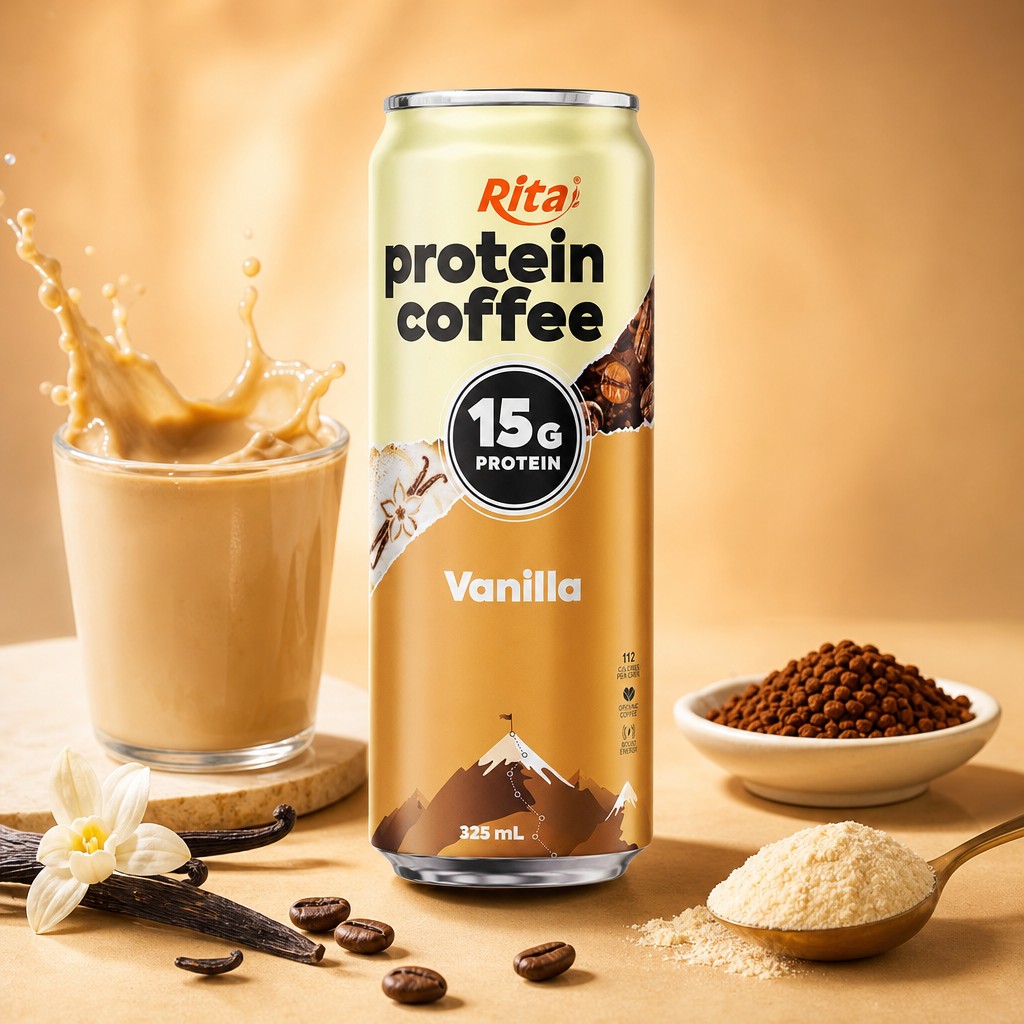
The formulation combines whole milk powder, milk protein concentrate and instant coffee powder to build a smooth vanilla latte with a roasted base and a lingering, gently sweet finish. Per 325 ml can the manufacturer specifies 15 g of protein per serving, approximately 18.9 g across the full container, alongside 183 kcal, 62 mg of caffeine, 11.4 g of total sugars and 247 mg of sodium. Those figures place the drink in the middle of the ready-to-drink coffee range: substantial enough to be read as a protein product, restrained enough to sit next to a standard latte without explanation.
| Specification | Value per 325 ml can |
|---|---|
| Format | Aluminum can, 325 ml |
| Protein | 15 g per serving (approx. 18.9 g per can) |
| Calories | 183 kcal |
| Caffeine | 62 mg |
| Total sugars | 11.4 g |
| Sodium | 247 mg |
| Flavor | Vanilla latte |
| Shelf life | Up to 24 months |
For a buyer building a category plan, that profile is easier to merchandise than an extreme formulation. It does not require a shelf talker explaining what the product is, and it does not invite an unflattering comparison with a protein powder sold two aisles away.
Packaging designed for the shelf
The can carries a warm beige-to-golden-brown gradient with bold typography and a circular badge that puts the 15 g protein figure at the center of the design. A mountain-inspired graphic and a dotted trail run along the base of the label, reinforcing a message of outdoor adventure that reads well in travel and convenience retail contexts. The palette is deliberately warm rather than clinical, which helps the can sit beside premium coffee instead of sports nutrition. Full artwork, pack shots and specifications are published on the Rita High Protein Coffee Vanilla Drink 325 ml product listing.
Shelf life and distribution practicality
A shelf life of up to 24 months changes the economics of exporting a coffee SKU. Distributors can plan ocean freight and warehouse cycles without the pressure of a short-dated chilled product, and retailers can hold safety stock on slower-turning formats. Ambient storage also means the product travels through the same container logistics as the rest of a beverage portfolio, which simplifies consolidation for importers handling several lines from a single supplier.
From the Coffee Highlands to the Can
Behind the label sits a sourcing chain that begins in Vietnam's Central Highlands, where the company's teams travel each harvest to review cherry quality and processing conditions, an inspection documented in its account of visits to Vietnam's coffee gardens at peak harvest season.
Video from those field visits gives buyers a direct view of the raw material stage: https://www.youtube.com/watch?v=F2yJLjUYiuo
The dairy side of the recipe follows a parallel path. Milk powder and milk protein concentrate are specified to consistent protein and solubility targets so that the finished can tastes the same in Mexico City as it does in Santiago, and ingredient documentation travels with every shipment as part of the standard export file.
Export Readiness and Market Opportunity in the Americas
The commercial case for the product is inseparable from the capability behind it.
RITA Food and Drink Co., Ltd, established in 2004, operates more than 50 automated production lines and ships over 1,200 containers per month to brands in more than 180 countries, with exports reaching over 200 countries and territories overall. The company works as an OEM and ODM partner, so a regional importer can either carry the existing Rita label or commission a private-label version of the same formulation for its own market. Production is certified under BRC, FSSC 22000, Halal Jakim, Halal HCA-GCC, Kosher, ISO, GMP, HACCP and SMETA.
Typical shipping lanes run from Vietnamese ports toward West Coast and Gulf destinations in North America, with onward distribution into Central American hubs. Consolidating a protein coffee line with other beverage volumes keeps freight cost per unit predictable, and the 24-month shelf life removes the expiry risk that complicates longer transit windows.
Documentation that shortens the approval cycle
Protein coffee tends to arrive through tender processes rather than spot buying, which means paperwork matters as much as the liquid. A buyer evaluating the Rita High Protein Coffee Vanilla Drink 325 ml can as a listing candidate will request audit reports, allergen declarations and shelf-life data before requesting a sample, and having those files ready is often the difference between a two-week approval and a two-month one.
The wider portfolio gives distributors room to build a mixed container. RITA's RITA coffee drink series covers ready-to-drink coffee formats beyond vanilla, while the milk-based beverage range extends the same dairy platform into other flavor families. Importers already moving coconut water or fruit juice from the same supplier can add a protein coffee line without opening a new vendor account.
How the Can Wins Space Against Established RTD Coffee
Competition in ready-to-drink coffee comes from two directions at once: global coffee brands with heavy marketing budgets, and private-label cans priced to move volume. A high protein coffee drink has to justify its position against both.
Three points of difference
- Specification clarity — the protein figure is printed as a badge rather than buried in a nutrition panel, so the value proposition survives a two-second glance.
- Format discipline — 325 ml is a deliberate single-serve size that fits chilled cabinets without forcing the price into a premium tier.
- Supply continuity — monthly container volumes and a 24-month shelf life reduce the risk of out-of-stocks during a promotional push.
Varun Beverages' decision to open another manufacturing facility in India to expand capacity shows how aggressively the sector is adding output, while analysts note that India's duty-free sugar quota will provide only modest relief for beverage makers facing high sugar costs. Sazerac, meanwhile, drew criticism for a controversial ice-cream van promotional stunt. Pricing and attention are both under pressure, which makes a stable, well-documented export supply a more valuable asset than it was a few years ago.
For a distributor weighing listings, the practical question is whether the product is positioned as a coffee or as a protein beverage, and the answer affects where it sits, who stocks it and what it is merchandised next to. Pack shots, specifications and order information for the Rita High Protein Coffee Vanilla Drink 325 ml can are published for buyers preparing a category review, and the broader RITA coffee drinks catalog shows how the vanilla variant fits into the wider lineup. Private-label enquiries run through the same manufacturing platform that serves existing brand partners.
Frequently Asked Questions
What protein content does the Rita High Protein Coffee Vanilla Drink provide?
Each 325 ml can delivers 15 g of protein per serving, approximately 18.9 g across the full container, together with 183 kcal, 62 mg of caffeine, 11.4 g of total sugars and 247 mg of sodium.
What packaging format is used?
The product is supplied in a 325 ml aluminum can with a shelf life of up to 24 months, shipped through standard ambient container logistics rather than refrigerated transport.
Which markets is the product positioned for?
The vanilla ready-to-drink coffee is aimed at distribution across Canada, the United States, Mexico, Brazil, Argentina, Colombia, Chile, Peru, Ecuador, Venezuela and Central American countries.
Can the formulation be produced under a private label?
Yes. RITA Food and Drink Co., Ltd operates as an OEM and ODM manufacturer with more than 50 automated production lines and exports to over 200 countries and territories, so importers can request the existing Rita brand or a private-label version of the recipe.
Which certifications support export documentation?
Production is certified under BRC, FSSC 22000, Halal Jakim, Halal HCA-GCC, Kosher, ISO, GMP, HACCP and SMETA.


 No.08, Thong Nhat Boulevard,