The global beverage industry is undergoing a significant transformation, driven by evolving consumer preferences and a relentless pursuit of novel sensory experiences. For importers, distributors, and F&B businesses, staying ahead means identifying products that encapsulate these trends and offer scalable, profitable opportunities. One such category demonstrating explosive potential is functional-texture beverages, with products featuring popping boba leading the charge in both established and emerging markets.
Key Takeaways
- The global beverage market is increasingly driven by experiential consumption, where texture and mouthfeel are as critical as flavor.
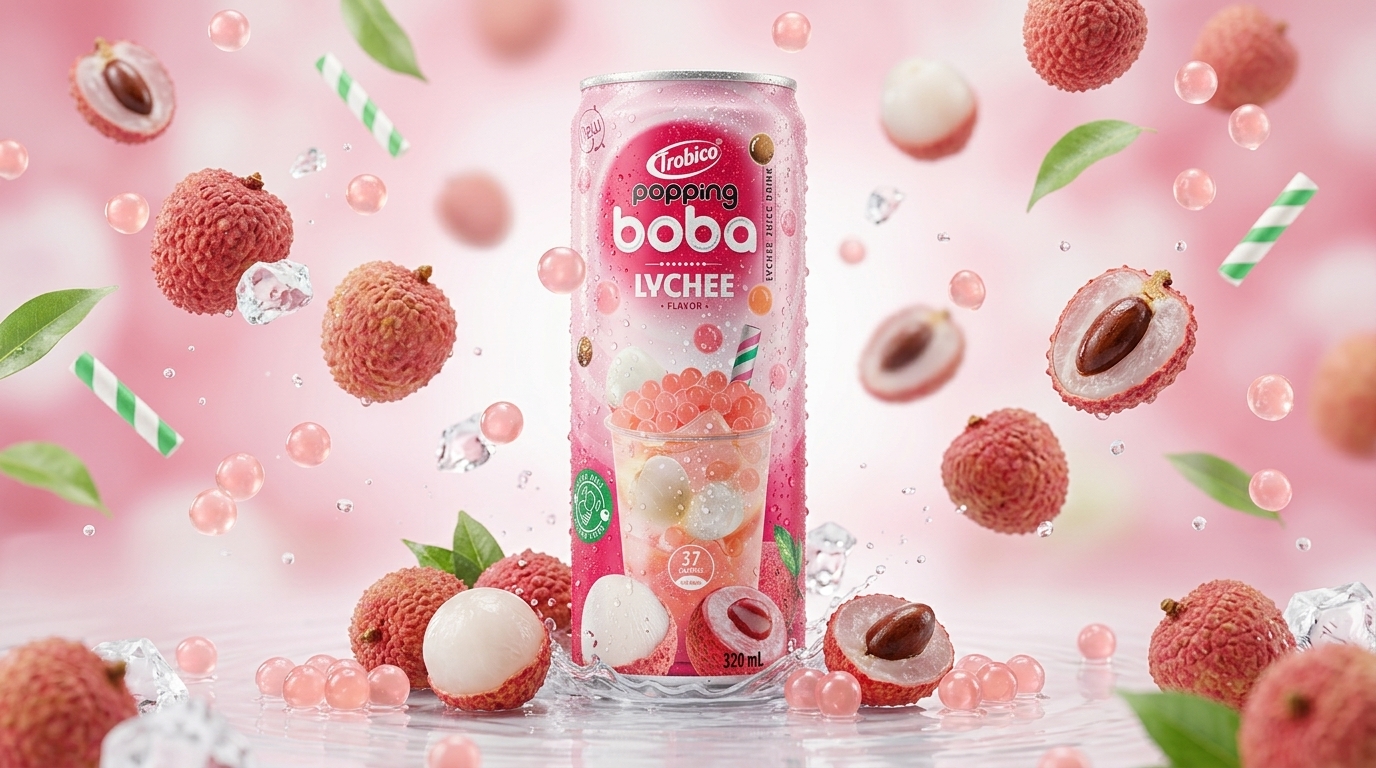
- Products like lychee-flavored canned drinks with popping boba represent a high-growth niche appealing to Gen Z and Millennial demographics.
- Strategic private label and contract manufacturing partnerships, such as those offered by established producers like RITA VINA through its Trobico brand, are key to capitalizing on this trend efficiently.
- The canned format offers superior logistical advantages for export and distribution, enhancing shelf stability and reducing operational complexity.
- Success in this segment requires a deep understanding of supply chain agility and consumer-centric innovation in beverage production lines.
The Rise of Experiential Beverages and Texture Innovation
Modern consumers, particularly in the Asia-Pacific and North American markets, are moving beyond mere thirst-quenching. They seek multisensory engagement. The incorporation of textural elements like popping boba—juice-filled capsules that burst in the mouth—transforms a simple drink into an interactive experience.
This trend aligns with the broader "foodtainment" movement. It is not just about what a product tastes like, but how it makes the consumer feel during consumption. For businesses, this represents a powerful tool for differentiation in crowded retail and HORECA channels.
Market Data and Consumer Insights
Recent industry analyses indicate a compound annual growth rate (CAGR) of over 8% for the global bubble tea and related textured beverage market from 2023 to 2030. This growth is not confined to specialty tea shops. It is rapidly expanding into retail-ready, packaged goods.
The driving force is a demographic shift. Younger consumers prioritize novelty, shareability on social media, and unique consumption moments. A product that combines a familiar and beloved flavor like lychee with the surprising texture of popping boba checks all these boxes.
Strategic Sourcing and Manufacturing: The Role of Established Production Lines
For B2B players, the challenge lies in sourcing products that are not only on-trend but also manufactured to high standards of consistency, safety, and scalability. This is where partnering with experienced OEM/ODM manufacturers becomes a critical business decision.
Brands like Trobico, under the umbrella of the reputable manufacturer RITA VINA, exemplify this capability. Leveraging advanced production lines, they can deliver complex products like the Popping Boba with Lychee Flavor Canned Drink at commercial scale. This ensures:
- Batch-to-Batch Consistency: Crucial for building brand loyalty and meeting retailer specifications.
- Speed to Market: Efficient production lines allow for quicker turnaround from concept to shelf.
- Customization Flexibility: From flavor profiles to boba size and sweetness levels, working with a capable producer allows for product tailoring to specific market preferences.
The Canned Advantage: Logistics, Sustainability, and HORECA Applications
The choice of packaging is a strategic business consideration. The canned format for beverages like the lychee popping boba drink offers distinct advantages:
Supply Chain and Export Efficiency
Cans are robust, stackable, and protect the product from light and oxygen, extending shelf life—a paramount concern for importers and distributors managing long shipping routes. They are also highly recyclable, aligning with growing B2B and B2C demand for sustainable packaging solutions.
Versatility in Channel Distribution
This format seamlessly crosses multiple channels:
- Retail & Convenience: Eye-catching cans drive impulse purchases.
- Vending Machines: A perfect fit for a high-traffic, on-the-go consumption model.
- HORECA: Restaurants and cafes can offer them as a unique, ready-to-serve beverage option with minimal preparation, enhancing their beverage menu without operational burden.
For wholesalers looking to supply the hotel and restaurant sector, a product like this provides an innovative alternative to traditional soft drinks and juices. It can be positioned as a premium offering, potentially commanding better margins.
Global Export Opportunities and Market Entry Strategies
The appeal of Asian-inspired flavors like lychee, combined with a globally understood textural novelty, creates a strong export proposition. Markets in Europe, the Middle East, and North America show high receptivity to such innovative beverages.
Key considerations for exporters and importers include:
- Regulatory Compliance: Ensuring products meet the FDA (or equivalent) and local food safety standards for ingredients and labeling. All claims must focus on flavor and experience, not health benefits.
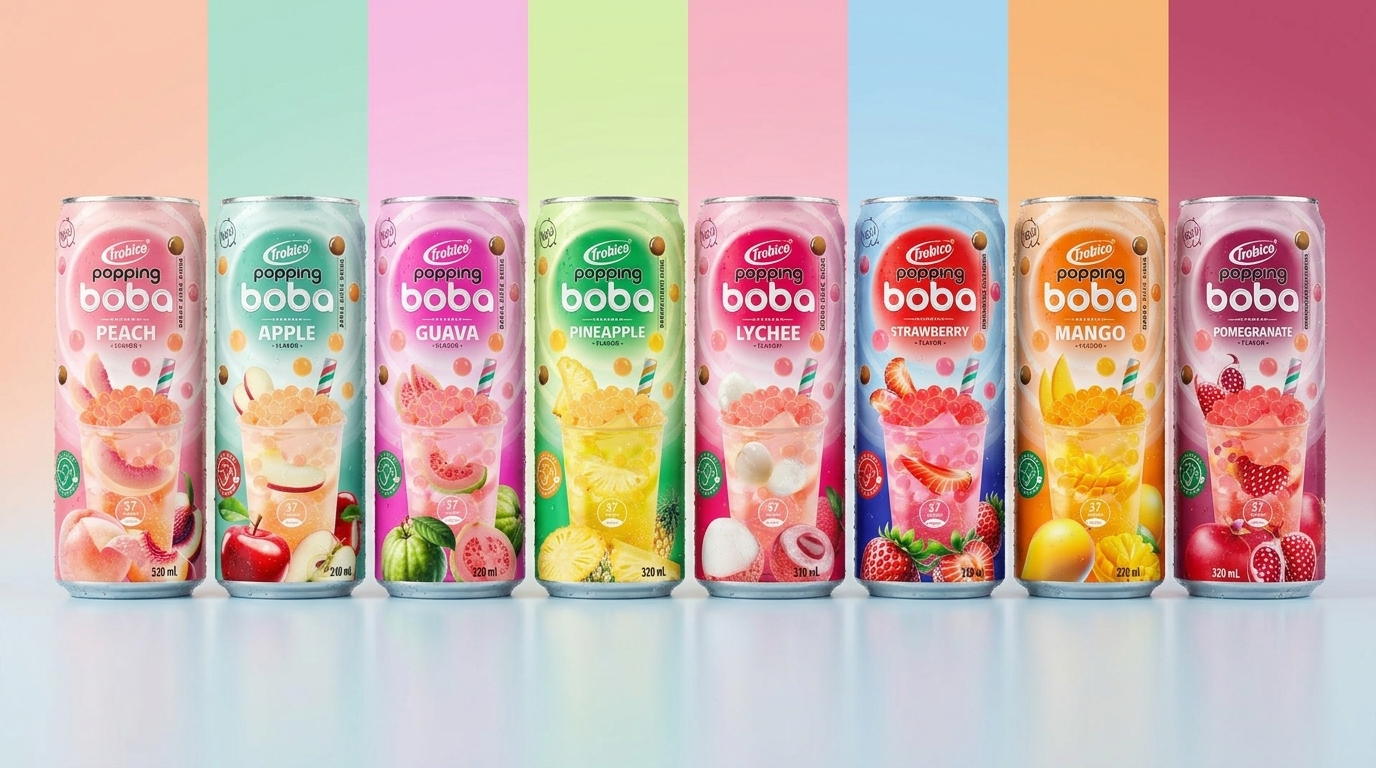
- Cultural Adaptation: While lychee is a successful entry point, working with a manufacturer that offers R&D capabilities allows for flavor localization.
- Branding Strategy: Whether pursuing a private label strategy or distributing an established brand like Trobico, clear communication of the experiential aspect is vital.
The canned lychee popping boba drink serves as a prime case study of a product designed with these global logistics and consumer trends in mind.
Future Outlook: Where Does the Textured Beverage Category Go Next?
The success of popping boba is likely the beginning, not the peak, of texture innovation. We anticipate further developments in:
- Flavor-Texture Synergy: More sophisticated pairings where the bursting liquid inside the boba complements or contrasts with the base drink.
- Functional Ingredients (Non-Claim): Incorporation of popular, neutral ingredients for color or mild flavor notes, always adhering to strict regulations regarding marketing claims.
- Packaging Innovation: While cans are ideal now, future formats may enhance the interactive experience further.
For businesses, the imperative is to build relationships with forward-thinking manufacturers. Partners who invest in production line technology and consumer insights will be best positioned to co-develop the next wave of successful products.
Frequently Asked Questions
What is the primary target demographic for popping boba canned drinks?
The core demographic is Gen Z and Millennial consumers (ages 18-35) who are adventurous, value experiential consumption, and are highly influenced by social media trends. However, the novelty factor also gives it broad appeal in family retail settings.
Why is the canned format advantageous for distributors?
Cans offer superior durability for shipping and handling, longer shelf life due to better light and oxygen barrier properties, high recyclability, and ease of storage and display. They are also a familiar and trusted format across global markets, simplifying market entry.
Can the flavor or boba characteristics be customized for my market?
Yes, when working with an OEM/ODM manufacturer like RITA VINA for their Trobico brand or private label production, customization is a key service. This can include adjusting the sweetness level, base flavor, size of the popping boba, and the flavor of the liquid inside the boba to suit regional taste preferences.
What are the key considerations for exporting this product category?
The main considerations are ensuring full compliance with the destination country's food safety and labeling regulations, securing reliable cold-chain or ambient shipping logistics as required, understanding local import duties, and developing marketing materials that highlight the sensory experience without making any unapproved functional claims.
How does this product fit into a HORECA (Hotel/Restaurant/Cafe) business model?
It serves as a high-margin, ready-to-serve premium beverage option. It requires no preparation, reduces waste compared to made-to-order bubble tea, and can enhance a menu by offering a modern, Instagram-worthy drink. It is suitable for mini-bar offerings in hotels, dessert pairings in restaurants, or a grab-and-go item in cafes.



 No.08, Thong Nhat Boulevard,