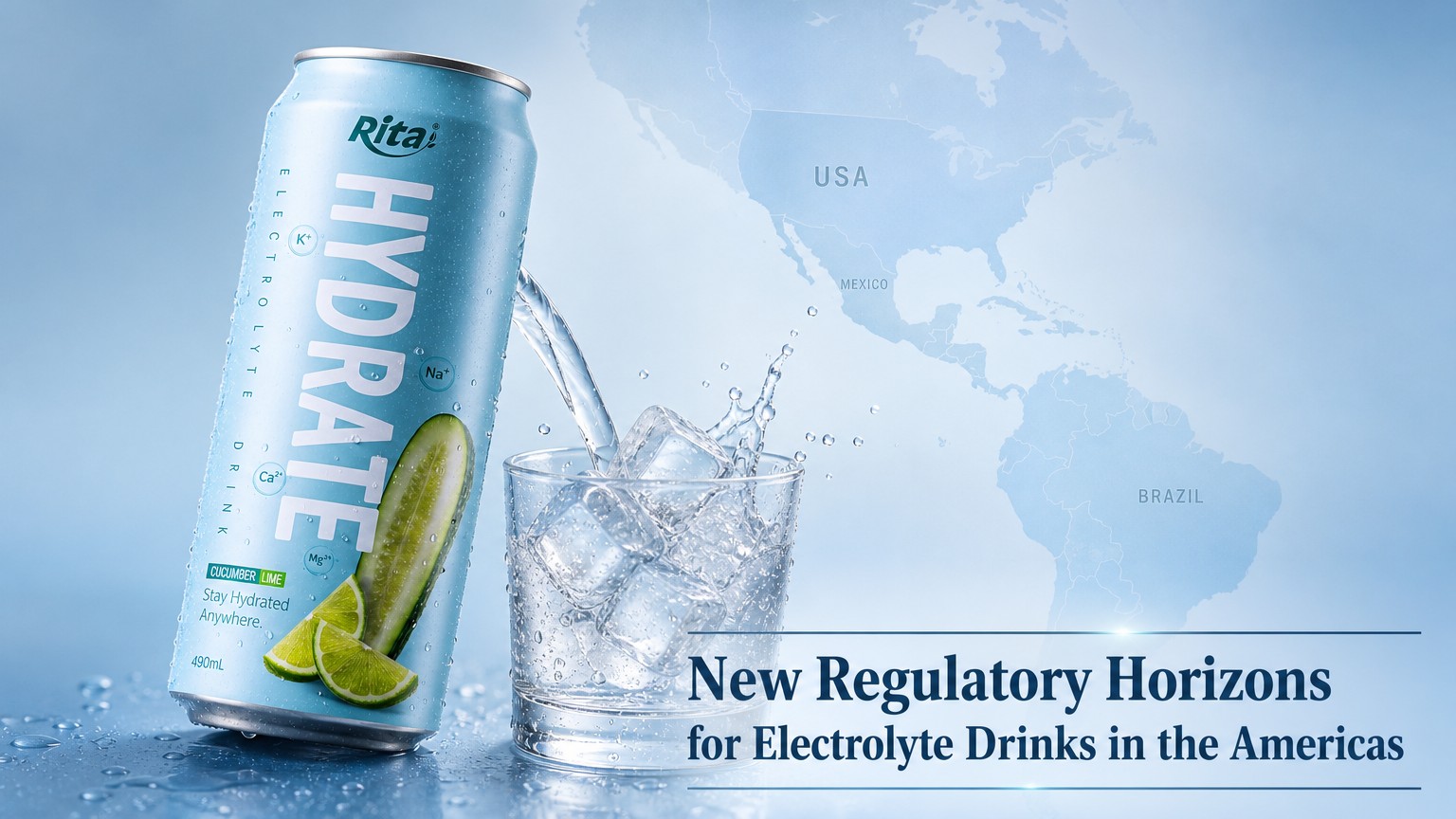
The global beverage landscape is constantly evolving, driven not only by consumer tastes but also by a complex web of international regulations. For producers like RITA Food and Drink Co., Ltd., navigating these regulatory frameworks is a critical part of delivering products like the 490ml Cucumber and Lime Electrolyte Juice Drink to dynamic markets across the Americas. This focus on compliance ensures consistency, safety, and market access for exporters and importers alike.
Key Takeaways
- International food safety standards are the bedrock of cross-border beverage trade.
- Differentiating products like electrolyte drinks requires clear labeling aligned with regional rules.
- Export-ready manufacturing hinges on globally recognized certifications.
- The Americas present diverse opportunities for value-added, functional hydration beverages.
- Strategic partnerships with established OEM/ODM manufacturers streamline market entry.
The Compliance Landscape for Exported Beverages
For any beverage exporter, the journey from production line to foreign shelf begins with understanding and adhering to a stringent set of standards. These regulations cover everything from ingredient sourcing and processing methods to nutritional labeling and marketing claims. For a product like the 490ml Cucumber and Lime Electrolyte Juice Drink, compliance means ensuring its electrolyte formulation and cucumber-lime flavor profile meet the specific definitions and allowances in each target country.
Major markets in the Americas, including the United States, Canada, Brazil, and Mexico, each maintain their own food safety authorities—such as the FDA, CFIA, ANVISA, and COFEPRIS. These agencies enforce rules that dictate how beverages are manufactured, tested, and labeled. A failure to comply can lead to costly delays, shipments being held at ports, or even being barred from the market. Therefore, manufacturers must build compliance into the core of their operations.
Key Certifications Driving Market Access
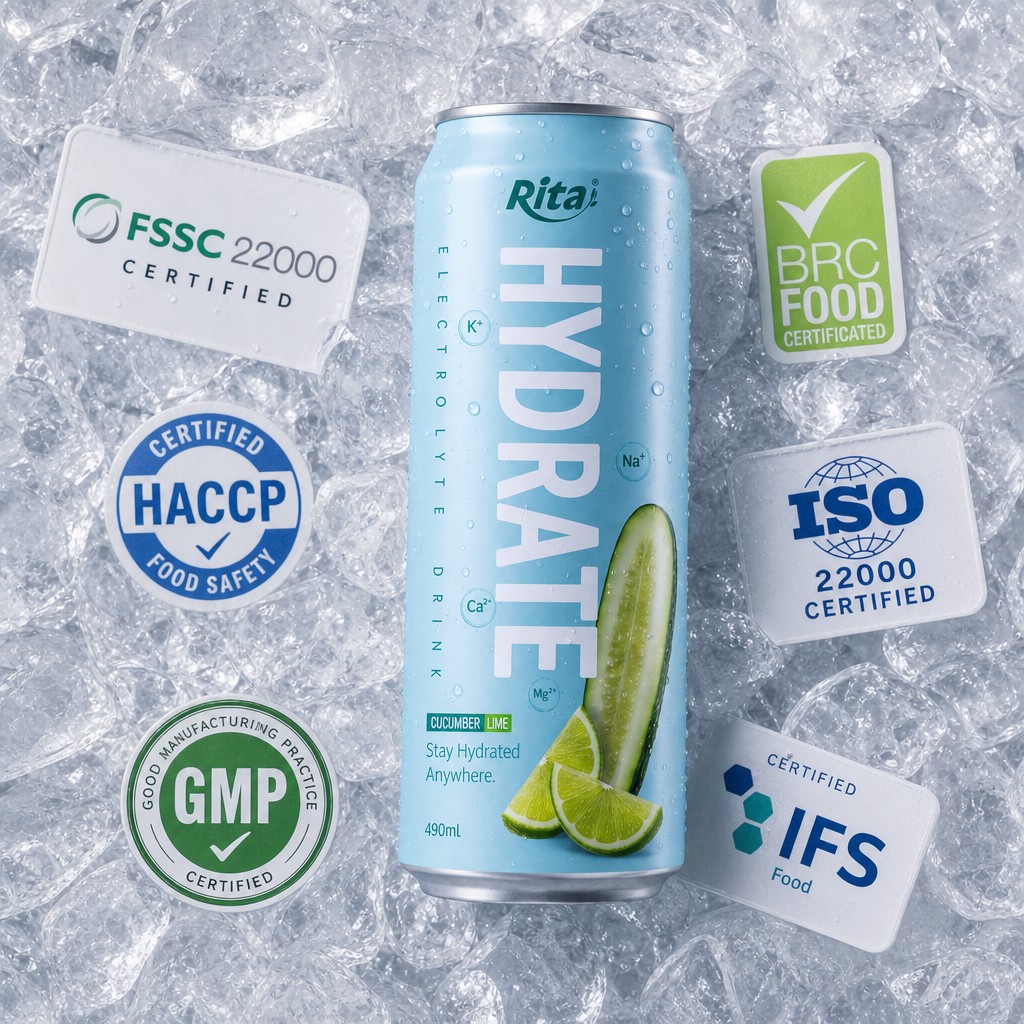
To meet these diverse requirements efficiently, forward-thinking manufacturers invest in a portfolio of internationally recognized certifications. These certifications act as a passport, verifying that a facility and its products consistently meet high-quality benchmarks. For exporters targeting the Americas and beyond, certifications like BRC (British Retail Consortium), FSSC 22000, and HACCP are often considered foundational. They provide a standardized assurance of safety and quality management systems that resonates with large retailers and distributors across continents.
Furthermore, certifications such as Halal, Kosher, and ISO extend a product's appeal to broader demographic segments within these markets. An aluminum can of cucumber and lime electrolyte drink that carries multiple top-tier certifications presents a powerful proposition for importers, as it significantly reduces their own compliance burden and risk.
Labeling Nuances for Electrolyte Drinks
One of the most intricate aspects of regulatory compliance is labeling. For electrolyte drinks, this is particularly crucial. Regulations specify how terms like "electrolyte" can be used, what electrolytes must be listed, and how they are quantified on the nutritional facts panel. A manufacturer must be precise about declaring the presence and amount of potassium (K+), sodium (Na+), calcium (Ca2+), and magnesium (Mg2+) that are part of a product's value proposition.
Country-specific requirements also govern the format, size, and language of labels. A can destined for the United States will have different mandatory label elements than one exported to Argentina or Chile. This includes the product name, ingredient list in descending order of weight, allergen statements, net quantity, and manufacturer/distributor information. Getting this right is non-negotiable for successful market entry.
Color, Design, and Ingredient Declarations
Beyond the nutritional panel, the visual design and ingredient story are subject to scrutiny. The use of imagery, such as cucumber slices and lime wedges on the packaging, must accurately represent the product's contents. Ingredients derived from flavors or specific sources must be clearly declared. For a drink highlighting its electrolyte content and natural flavors, the label must transparently communicate this without making unauthorized health claims.
The choice of packaging itself—an aluminum can in this case—must be food-safe and compliant with material migration limits. The entire package, from the pull-tab to the base, is considered part of the product's regulatory profile. This holistic view of compliance, from formula to final package, is what ensures a smooth clearance through customs and inspection.
The OEM/ODM Advantage in a Regulated Market
Navigating this maze of international regulations is a significant challenge, especially for brands and distributors focused on sales and marketing. This is where the partnership model with an experienced OEM (Original Equipment Manufacturer) or ODM (Original Design Manufacturer) becomes invaluable. Companies like RITA, established in 2004 and exporting to over 200 countries, bring deep regulatory expertise to the table.
By leveraging a manufacturer's pre-existing certification portfolio and regulatory know-how, brands can drastically shorten their time-to-market. The manufacturer handles the complexities of formulation within legal frameworks, securing necessary approvals, and producing compliant packaging. This allows the brand owner to concentrate on distribution, branding, and understanding local consumer preferences in markets like Colombia, Peru, Ecuador, Venezuela, and across Central America.
Scaling Production with Regulatory Confidence
The scale of production also plays a role in maintaining compliance. With over 50 automated production lines, a large-scale manufacturer can implement rigorous and consistent quality control protocols that are difficult for smaller operations to replicate. This consistency is vital for meeting the exacting standards of major retail chains across North and South America. Furthermore, the ability to produce a wide range of beverages—from tropical fruit juices to functional electrolyte drinks—in various formats (aluminum cans, PET bottles, etc.) allows brands to tailor their offerings while relying on a single, compliant production base.
Market and Export of Electrolyte Drinks
Annual Trend
| Year | Transaction Count | Total Value (USD) | Total Weight (kg) | Total Quantity |
|---|---|---|---|---|
| 2025 | 513 | 2.27 triệu | 2.99 triệu | 2.69 triệu |
| 2026 | 998 | 4.63 triệu | 7.91 triệu | 5.23 triệu |
| YoY 2026 vs 2025 | +94.5% | +103.7% | +164.9% | +94.4% |
Data source: Tradesparq Trade Data (tradesparq.com)
Top Origin Countries
| Country | Transaction Count | Total Value (USD) | Weight (kg) | Market Share (%) | Average Price (USD) |
|---|---|---|---|---|---|
| Mexico | 612 | 4.07tr | 5.03tr | 40.8% | 0.66 |
| China | 439 | 1.15tr | 4.01tr | 29.3% | 1.96 |
| US | 154 | 781k | 650k | 10.3% | 1.18 |
| Vietnam | 136 | 279k | 388k | 9.1% | 2.85 |
| UK | 25 | 21.6k | 116k | 1.7% | 14.7 |
Data source: Tradesparq Trade Data (tradesparq.com)
Top Destination Countries
| Country | Transaction Count | Total Value (USD) | Weight (kg) | Market Share (%) | Average Price (USD) |
|---|---|---|---|---|---|
| Costa Rica | 555 | 3.09tr | 3.12tr | 37.1% | 0.60 |
| US | Future-Proofing with Proactive Compliance
As consumer awareness grows and regulations tighten, the bar for beverage compliance will only continue to rise. Proactive manufacturers are not just meeting current standards but are anticipating future ones. This involves staying engaged with regulatory updates, investing in advanced R&D to test new ingredients and processes, and maintaining transparent relationships with certifying bodies. For brands looking to introduce innovative products like a refreshing cucumber and lime electrolyte drink into the competitive American markets, this proactive stance is a key differentiator. It transforms regulatory compliance from a hurdle into a competitive advantage, ensuring long-term sustainability and consumer trust. The journey of a product from concept to consumer shelf is paved with these essential, though often unseen, regulatory milestones. From Farm to Can: Ensuring Raw Material IntegrityA crucial, yet often overlooked, aspect of regulatory compliance starts at the very beginning of the supply chain: the sourcing of raw materials. For a drink like cucumber and lime, this means ensuring the agricultural inputs meet pesticide residue limits and other safety standards prescribed by import countries. Reputable manufacturers establish strict supplier codes of conduct and traceability systems. This integrity is maintained through to the final product, supporting claims of quality and safety that regulators and consumers demand. The journey from farm to factory is thus governed by the same principles of quality and safety that apply to the finished good.  |


 No.08, Thong Nhat Boulevard,