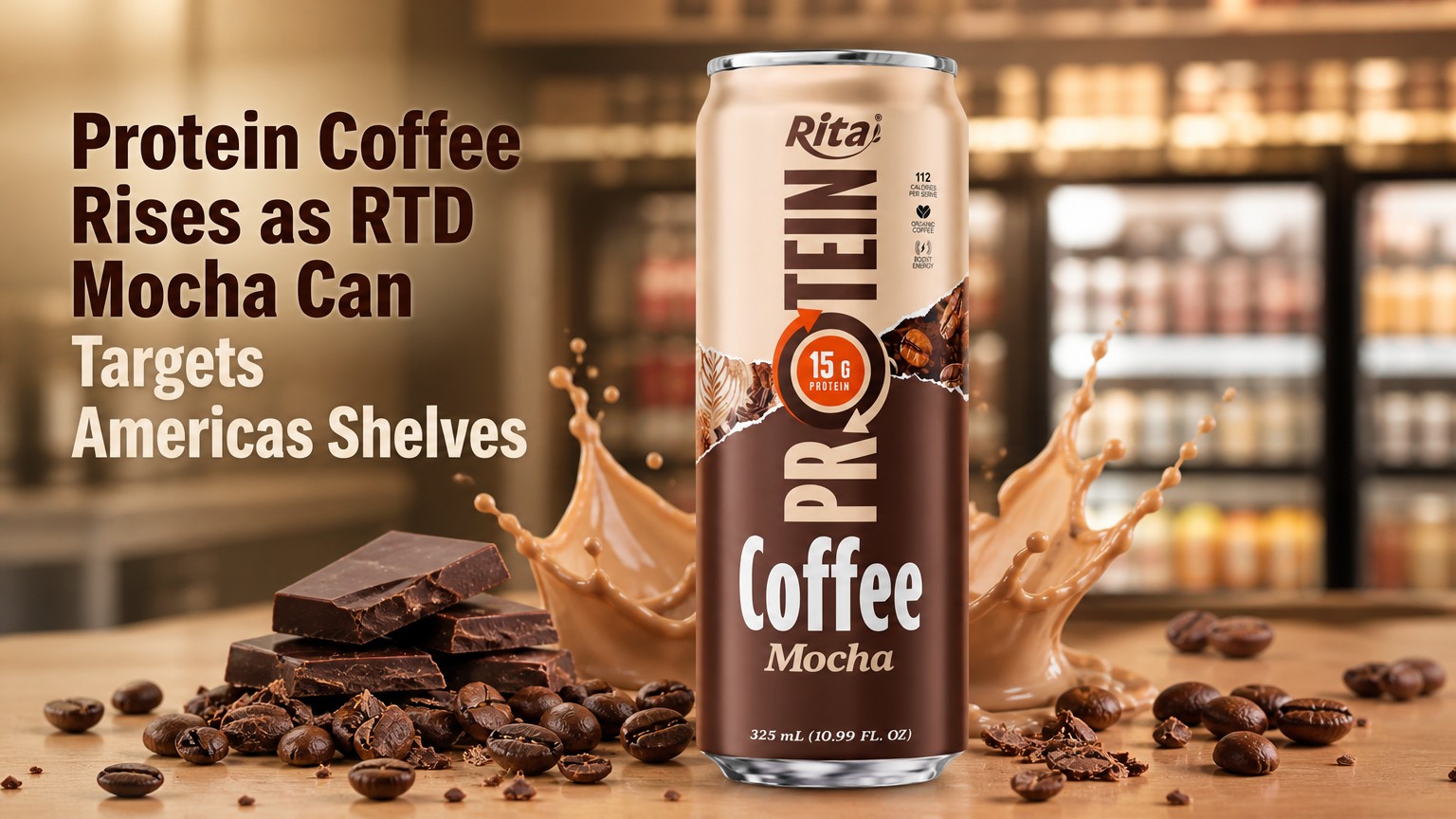
The ready-to-drink coffee aisle is getting a serious protein upgrade, and Rita Protein Coffee 15g Mocha is positioning itself at the center of that shift. A 325 ml aluminum can that pairs roasted coffee with creamy chocolate undertones and 15 g of protein per serving, the product reflects a broader movement across the Americas where convenience, taste and macro-friendly formulations increasingly share the same shelf space. As distributors and retailers from the United States and Canada down through Mexico, Colombia, Brazil and Central America scan their portfolios for the next high-velocity SKU, protein coffee is emerging as one of the most closely watched categories in the beverage trade.
Key Takeaways
- Rita Protein Coffee 15g Mocha delivers 15 g of protein, roughly 201 kcal and 91 mg caffeine per 325 ml can, packaged for on-the-go consumption.
- The Americas region shows rising demand for ready-to-drink protein beverages that combine indulgent flavor profiles with convenient formats.
- RITA Food and Drink Co., Ltd. operates 50+ automated production lines and exports to more than 200 countries and territories, supporting large-scale supply programs.
- Certifications including BRC, FSSC 22000, Halal, Kosher, ISO, GMP, HACCP and SMETA position the product for mainstream retail and private-label distribution.
- Mocha flavor alignment with dessert-inspired taste preferences makes the SKU a natural fit for supermarket and convenience-store placement across North, Central and South America.
Protein Coffee and the New Ready-to-Drink Opportunity Across the Americas
Across the Americas, the protein RTD segment has moved from niche to mainstream in a remarkably short window. Consumers who once reached for a protein shake as a dedicated post-workout ritual now expect protein to travel in formats they already enjoy, coffee among them. That expectation has created an opening for products like Rita Protein Coffee 15g Mocha, a ready-to-drink high-protein coffee mocha sold in a sleek 325 ml aluminum can that requires no preparation whatsoever.
The timing matters. Coffee culture in the region is deeply established, from the specialty cafés of major metropolitan centers to the corner stores of smaller municipalities. Layering a familiar mocha flavor onto that existing coffee affinity lowers the barrier to trial for shoppers who are curious about protein beverages but reluctant to abandon the taste they already prefer. The result is a product that reads as an indulgence first and a functional purchase second, a sequencing that beverage marketers have long understood drives faster initial adoption.
Market observers note that the mocha variant in particular benefits from dessert-inspired taste preferences that travel well across borders. Chocolate-coffee combinations are legible to shoppers in virtually every market in the hemisphere, which simplifies marketing spend and shelf communication for distributors managing multi-country portfolios.
Why Mocha Works as a Cross-Border Flavor Profile
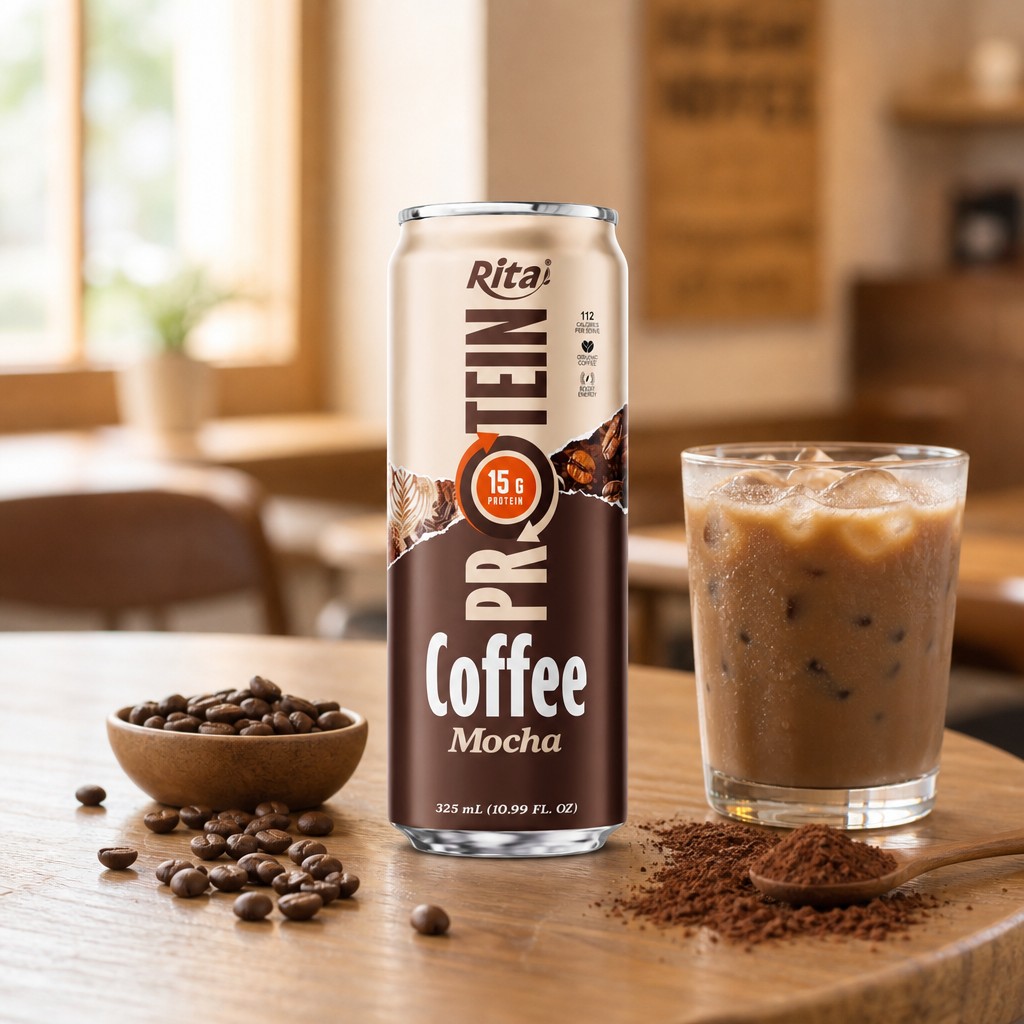
Flavor is the first gate any new beverage must pass, and mocha clears it with unusual consistency. The blend of instant coffee powder and alkalised cocoa powder in Rita Protein Coffee 15g Mocha produces a layered profile that reads as familiar rather than experimental. Roasted coffee notes arrive first, followed by creamy chocolate undertones and a natural mocha finish, a sequence designed to satisfy both coffee loyalists and chocolate-forward drinkers.
That balance is commercially significant. Retail buyers across the region tend to be cautious about SKUs that require consumer education, and a mocha-flavored protein coffee needs very little. The name alone communicates the experience, which allows shelf talkers and packaging to focus on the protein claim rather than explaining the flavor. The can itself reinforces this with a warm brown, beige and cream color palette, stylized coffee-bean and chocolate-shaving graphics, and a prominent circular badge reading 15 G PROTEIN.
For private-label programs, the mocha profile also offers a useful blank canvas. Distributors who want to carry a protein coffee under their own branding can lean on the established flavor while differentiating through label design, a service that RITA supports through its OEM and ODM capabilities. More on those manufacturing services can be found in the OEM Service catalog.
Inside the Can: Ingredients, Specs and Packaging Design
Transparency on the label has become a baseline expectation, and the packaging of Rita Protein Coffee 15g Mocha addresses it directly. A torn-paper design element reveals the ingredient list in a way that reads as deliberate rather than buried, a visual cue that signals openness to shoppers who scan before they buy. The ingredients themselves are straightforward: water, whole milk powder, milk protein concentrate, instant coffee powder, alkalised cocoa powder and natural mocha flavor.
The technical specifications speak to consistency across production runs, a concern for any buyer ordering at container scale. Brix measures 14.0 ± 0.5 and pH sits at 6.5 ± 0.5, tolerances tight enough to reassure quality teams that each can will taste like the last. Shelf life extends to 24 months under cool, dry storage conditions, giving distributors comfortable runway for inventory planning and seasonal promotions.
Nutritional Snapshot and Consumer Perception
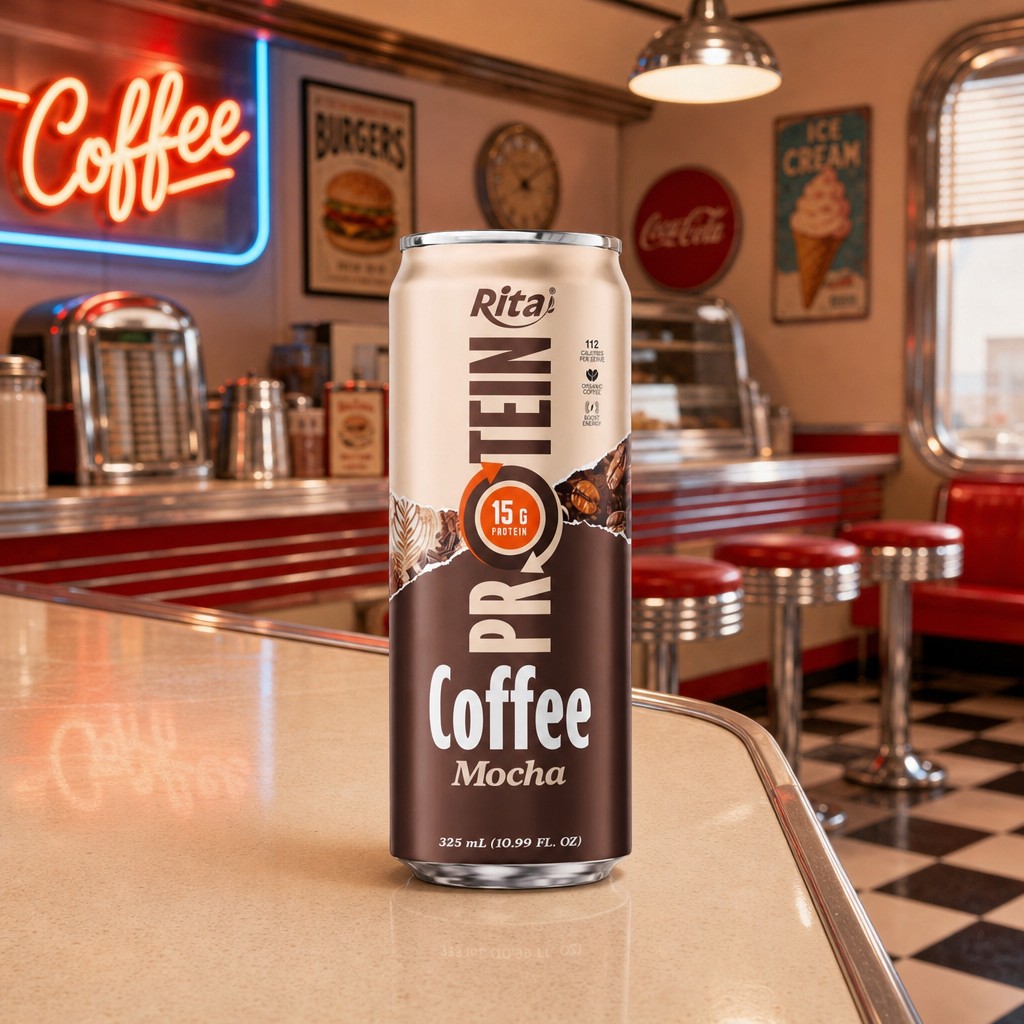
Each 325 ml serving carries approximately 201 kcal, 17.6 g of protein and 91 mg of caffeine, figures that place the product squarely in the conversation around protein coffee options for shoppers tracking their intake. The bold vertical PROTEIN text running down the can and the orange circular 15 G PROTEIN badge ensure the headline number registers at arm's length, even in a crowded cooler door.
| Specification | Value |
|---|---|
| Net volume | 325 ml (10.99 fl oz) |
| Protein per serving | 15 g (17.6 g stated range) |
| Energy per serving | ~201 kcal |
| Caffeine per serving | ~91 mg |
| Brix | 14.0 ± 0.5 |
| pH | 6.5 ± 0.5 |
| Shelf life | 24 months (cool, dry storage) |
| Packaging | 325 ml aluminum can |
Source: Product specification sheet, RITA Food and Drink Co., Ltd.
From a design standpoint, the can communicates premium positioning without resorting to clutter. The silver top and bottom frame a two-tone body split between beige and dark brown, with white COFFEE and beige MOCHA lettering anchoring the lower third. Side icons reference the coffee sourcing and the caffeine content, while the net volume sits quietly at the base. It is a package built for shelf impact and quick comprehension, two qualities that matter enormously in impulse-driven categories like ready-to-drink coffee.
From Our Coffee Gardens: Raw Material Sourcing
Consistent flavor at scale begins long before the production line, and RITA's sourcing story starts in Vietnam's highland coffee belt. The company maintains close relationships with growers in the Central Highlands, where harvest timing and cherry selection set the baseline quality for the instant coffee powder used across its coffee drink portfolio.
The company documents these relationships openly, including a field visit to Vietnam's coffee gardens during peak harvest season, offering buyers visibility into the upstream part of the supply chain.
For buyers evaluating provenance alongside price, that transparency is a differentiator. It also connects the finished can back to a specific agricultural region rather than a generic commodity market, a narrative that resonates with specialty-oriented retail partners. The broader ingredient base draws on the Mekong Delta, described by the company as its high-quality raw materials area, a region that supplies the milk powders and other staples used across RITA's beverage lines.
A documentary-style walkthrough of that sourcing region is available at https://www.youtube.com/watch?v=jiBixXjeG8A, giving prospective partners a visual sense of where the ingredient journey begins.
Manufacturing Scale, Certifications and Export Readiness
Scale is where many promising beverage concepts falter. RITA Food and Drink Co., Ltd., established in 2004, has spent two decades building the infrastructure to avoid that trap. The company operates more than 50 automated production lines and ships over 1,200 containers monthly, a volume that supports programs ranging from single-country launches to multi-market rollouts.
The certification portfolio matters just as much for buyers navigating import requirements. BRC, FSSC 22000, Halal Jakim, Halal HCA-GCC, Kosher, ISO, GMP, HACCP and SMETA collectively cover the food safety, religious, quality and ethical audit frameworks that retail and foodservice customers increasingly demand. For a protein coffee targeting mainstream shelves, that checklist removes a common source of friction during onboarding.
Export reach extends to more than 200 countries and territories, giving the company established logistics pathways into markets across the Americas. Buyers interested in the broader coffee portfolio can explore the Coffee Drinks catalog for complementary formats and flavor variants.
Private Label and Co-Manufacturing Pathways
Not every distributor wants to carry a third-party brand, and RITA's private-label program addresses that directly. Through its ODM Service, partners can develop bespoke protein coffee formulations, adjust flavor profiles and specify packaging graphics while relying on the same certified production infrastructure.
This model is particularly relevant for regional retailers who see protein coffee as a category to own rather than merely stock. A private-label SKU allows tighter margin control and brand differentiation, while the underlying product quality remains anchored to the same specifications described above. For buyers who prefer a curated starting point, the Coffee Drink Series on juicevn.com offers a ready-made selection of coffee beverages available for distribution.
Lead times, minimum order quantities and customization options vary by program, and serious inquiries typically begin with a formulation discussion followed by sampling. The advanced R&D capability referenced in the company's profile supports that process, allowing tweaks to protein content, sweetness level or flavor intensity before full-scale production begins.
Competitive Context and Category Momentum
The protein coffee opportunity does not exist in isolation. The broader beverage industry is in a period of active portfolio reshaping, with several recent moves underscoring how quickly priorities can shift. Shepherd Neame, for instance, has redirected the focus of its new brewery toward developing and promoting its own brands, a reminder that even established players are consolidating around proprietary offerings. Meanwhile, Varun Beverages announced plans for an additional manufacturing facility in India, signaling confidence in volume growth across emerging-market beverage consumption.
Supply-side pressures remain a live variable. India's duty-free sugar quota is expected to deliver only limited relief for beverage makers facing ongoing supply constraints, a dynamic that keeps input-cost planning at the forefront of category strategy. On the packaging side, Innocent Drinks is testing edible seaweed pods as a sustainable alternative, a development worth watching as aluminum and PET formats continue to dominate RTD distribution. And in the promotional arena, Sazerac drew criticism for an ice-cream van stunt, a case study in how experiential marketing can misfire when it strays too far from brand equity.
Against that backdrop, a product like Rita Protein Coffee 15g Mocha benefits from clarity of proposition. It is a ready-to-drink coffee, it carries a specific and easily communicated protein claim, and it arrives in a format consumers already know how to use. That simplicity is an asset in a category where competing narratives about sustainability, provenance and wellness can muddy the message.
Positioning the SKU for Retail and Distribution Partners
Shelf placement decisions ultimately come down to velocity projections, and several factors favor protein coffee in the current environment. The 325 ml can fits standard cooler configurations, the 24-month shelf life reduces markdown risk, and the mocha flavor profile supports both planned purchases and impulse grabs. For convenience-store operators, the caffeine content gives the product a natural adjacency to energy drinks and standard RTD coffee without requiring a separate merchandising story.
Supermarket buyers, meanwhile, tend to evaluate protein beverages through a different lens. Here the protein-per-serving figure and the clean ingredient deck do the heavy lifting, supported by packaging that looks at home next to premium dairy and functional offerings. The torn-paper ingredient reveal and the restrained color palette signal a product that takes its formulation seriously, which helps justify a price position above entry-level RTD coffee.
Regional nuances matter as well. In markets where chocolate-coffee desserts are a cultural staple, the mocha variant can lean into indulgence framing. In markets where coffee is consumed more plainly, marketing can emphasize the protein figure and the convenience of the format. Either way, the underlying product remains the same, which simplifies inventory planning for distributors operating across multiple countries.
Building a Multi-SKU Beverage Portfolio
Protein coffee rarely travels alone in a distributor's portfolio. Retailers who add a protein coffee SKU often look for complementary offerings, and RITA's range extends well beyond coffee. The company manufactures tropical fruit juices, coconut products, functional drinks, energy drinks and more, packaged in aluminum cans, glass bottles, PET and PP containers. That breadth allows a single supplier relationship to support an entire beverage aisle refresh.
For partners building out that assortment, the Rita Protein Coffee 15g Mocha product page provides full specifications, imagery and ordering details, while the broader coffee drink series catalog showcases adjacent SKUs that share the same manufacturing pedigree. Consolidating with one certified supplier reduces audit overhead and simplifies logistics, advantages that become more pronounced as order volumes grow.
The company's track record of supplying brands in more than 180 countries provides a reference base that procurement teams can draw on during vendor evaluation. Combined with the certifications and production scale noted earlier, that history positions RITA as a credible partner for programs that need to move from sampling to shelf within a defined timeline.
Frequently Asked Questions
What is Rita Protein Coffee 15g Mocha?
Rita Protein Coffee 15g Mocha is a ready-to-drink high-protein coffee mocha sold in a 325 ml aluminum can. It combines water, whole milk powder, milk protein concentrate, instant coffee powder, alkalised cocoa powder and natural mocha flavor, delivering approximately 201 kcal, 17.6 g of protein and 91 mg of caffeine per serving.
Who manufactures Rita Protein Coffee 15g Mocha?
The product is manufactured by RITA Food and Drink Co., Ltd., a Vietnamese OEM and ODM beverage manufacturer established in 2004. The company operates more than 50 automated production lines, exports over 1,200 containers monthly and supplies brands in more than 180 countries.
Which certifications does the product carry?
Production facilities hold BRC, FSSC 22000, Halal Jakim, Halal HCA-GCC, Kosher, ISO, GMP, HACCP and SMETA certifications, covering food safety, quality management, religious compliance and ethical auditing requirements.
What is the shelf life of Rita Protein Coffee 15g Mocha?
The product maintains stability for 24 months when stored under cool, dry conditions, giving distributors and retailers a generous inventory window before expiry.
Is private-label production available for this protein coffee?
Yes. RITA offers OEM and ODM services that allow partners to develop branded versions of protein coffee and other beverages using the same certified production infrastructure. Details are available through the company's OEM and ODM service pages.


 No.08, Thong Nhat Boulevard,