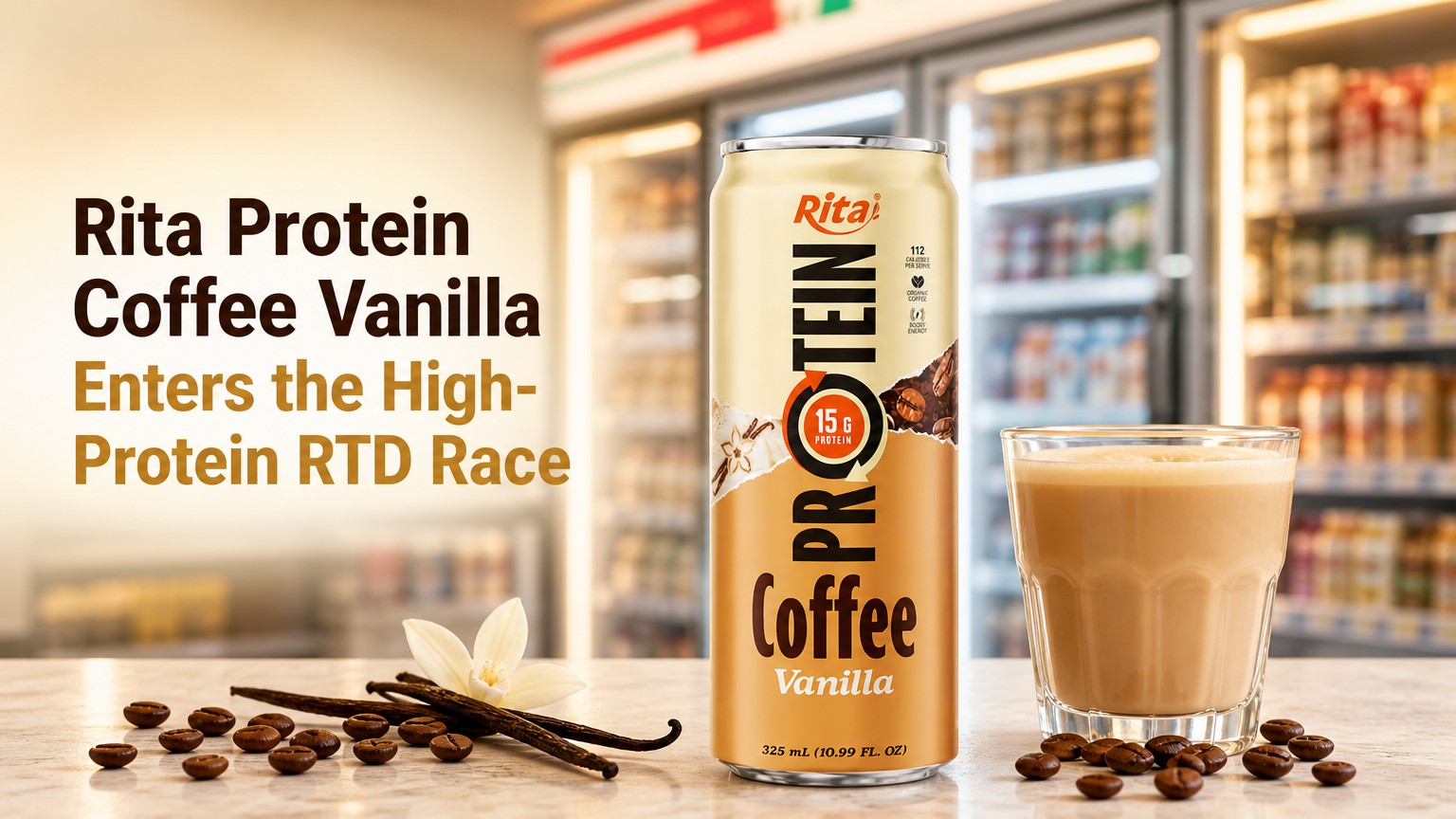
The ready-to-drink coffee aisle has quietly reorganized itself over the past two years. Where shelf space was once split between chilled lattes and ambient canned espressos, buyers now routinely scan for a second signal beyond roast and origin: protein. That shift frames the conversation around ready-to-drink protein coffee, the category RITA Food and Drink Co., Ltd. is putting forward with Rita Protein Coffee 15g, a vanilla-flavored 325ml aluminum can developed for convenience retail, studio counters, supermarket grab-and-go sets and private-label grocery programs across the Americas.
Key Takeaways
- RITA Food and Drink Co., Ltd. presents ready-to-drink protein coffee through Rita Protein Coffee 15g, a vanilla latte packed in a 325ml can.
- Label figures show 15g of protein per can, roughly 183 kcal per can, and about 19mg caffeine per 100ml.
- The formula combines whole milk powder, milk protein concentrate, instant coffee powder and natural vanilla latte flavoring.
- RITA supports the format with OEM and ODM capacity, BRC, FSSC 22000, ISO, HACCP, Halal and Kosher certifications, and shipments to more than 200 countries and territories.
- Buyer conversations span the United States, Canada, Mexico, Brazil, Colombia, Peru, Chile and the wider region.
Brand Spotlight on a Ready-to-Drink Protein Coffee Can
The proposition sits on the front of the can: a circular 15g protein badge beside bold PROTEIN lettering.
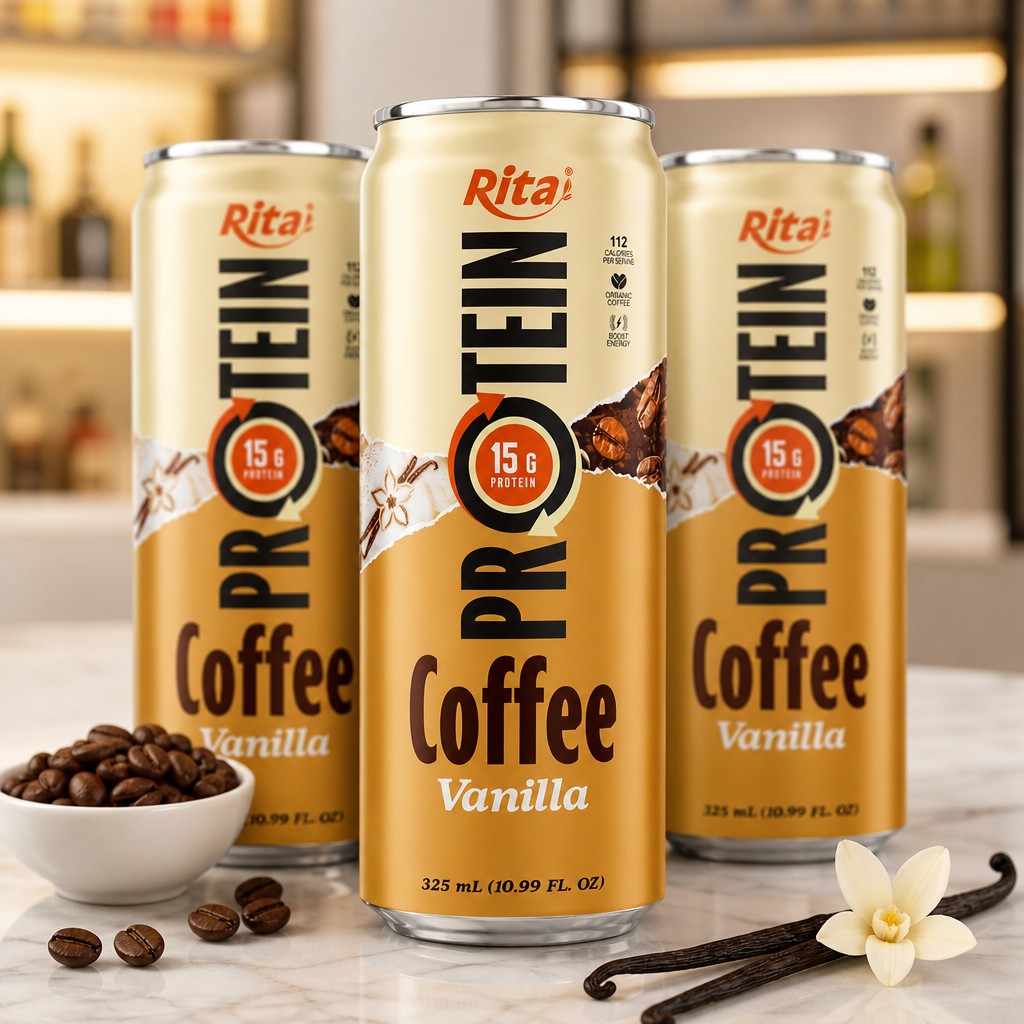
Rita Protein Coffee 15g – Ready-to-Drink High Protein Coffee Vanilla ships in a 325ml (10.99 FL OZ) aluminum can and is being positioned for buyers from the United States and Canada through Mexico, Brazil, Argentina, Colombia, Chile, Peru, Ecuador, Venezuela and Central America. Intended placements include convenience cold boxes, fitness-adjacent counters, supermarket grab-and-go shelves and wholesale cash-and-carry. Full specifications, pack configurations and export terms are published in the juicevn.com listing for the Rita Protein Coffee 15g Vanilla 325ml can.
The manufacturer behind the can is RITA Food and Drink Co., Ltd., established in 2004 and operating as a Vietnamese OEM and ODM beverage supplier. The company runs more than 50 automated production lines, ships over 1,200 containers a month and records exports to more than 200 countries and territories. That scale is the reason a single vanilla SKU can be discussed as a regional rollout rather than a sample order.
Inside the ready-to-drink protein coffee format
Within the ready-to-drink protein coffee segment, this can is specified for ambient storage and immediate consumption, with no preparation step. The label positions it as a vanilla latte rather than a pure espresso shot: whole milk powder and milk protein concentrate carry the body, instant coffee powder supplies roast character, and natural vanilla latte flavoring rounds the finish. Caffeine is listed at roughly 19mg per 100ml, a lighter reading than most espresso-format cans sharing the same shelf.
- Volume – 325ml (10.99 FL OZ) aluminum can
- Protein – 15g per can, shown in a circular front badge
- Energy – approximately 183 kcal per can, about 56 kcal per 100ml
- Caffeine – around 19mg per 100ml
- Flavor – vanilla latte, smooth and lightly sweet
Who Is Buying the Can
Two buyer profiles dominate early conversations. Retail and distribution partners want a single-SKU answer for shoppers who look for protein figures and a coffee ritual in the same grab. Brand owners, by contrast, want a base they can label themselves and reorder without reformulating every season.
Both groups ask the same question: can the format travel across borders without reformulation?
Formulation, Flavor and Label Specs
Four ingredients do the work here, and each one is chosen for taste and texture.
Whole milk powder and milk protein concentrate create the creamy mouthfeel that separates this drink from black canned coffee. Instant coffee powder dissolves cleanly into the liquid base, while natural vanilla latte flavoring supplies the dessert-like top note shoppers associate with cafe menus. RITA's broader dairy range, including its milk series of flavored and plain dairy drinks, gives the company a reference bench for calibrating sweetness and viscosity across variants.
| Specification | Rita Protein Coffee 15g Vanilla 325ml |
|---|---|
| Pack | 325ml aluminum can (10.99 FL OZ) |
| Protein per can | 15g |
| Energy per can | Approximately 183 kcal |
| Caffeine | About 19mg per 100ml |
| Flavor | Vanilla latte |
| Ingredients | Whole milk powder, milk protein concentrate, instant coffee powder, natural vanilla latte flavoring |
| Serving format | Ambient, ready to drink, no preparation |
Manufacturer-published label figures for the 325ml can.
Flavor calibration matters more than it sounds in this category. The vanilla latte profile is deliberately mid-weight: sweet enough to read as a treat, milky enough to carry a noticeable protein load without a chalky finish, and coffee-forward enough to sit beside standard RTD lattes in blind tastings.
Can Design Built for the Cold Box
Shelf competition in chilled beverage sets is usually decided in about two seconds of eye contact.
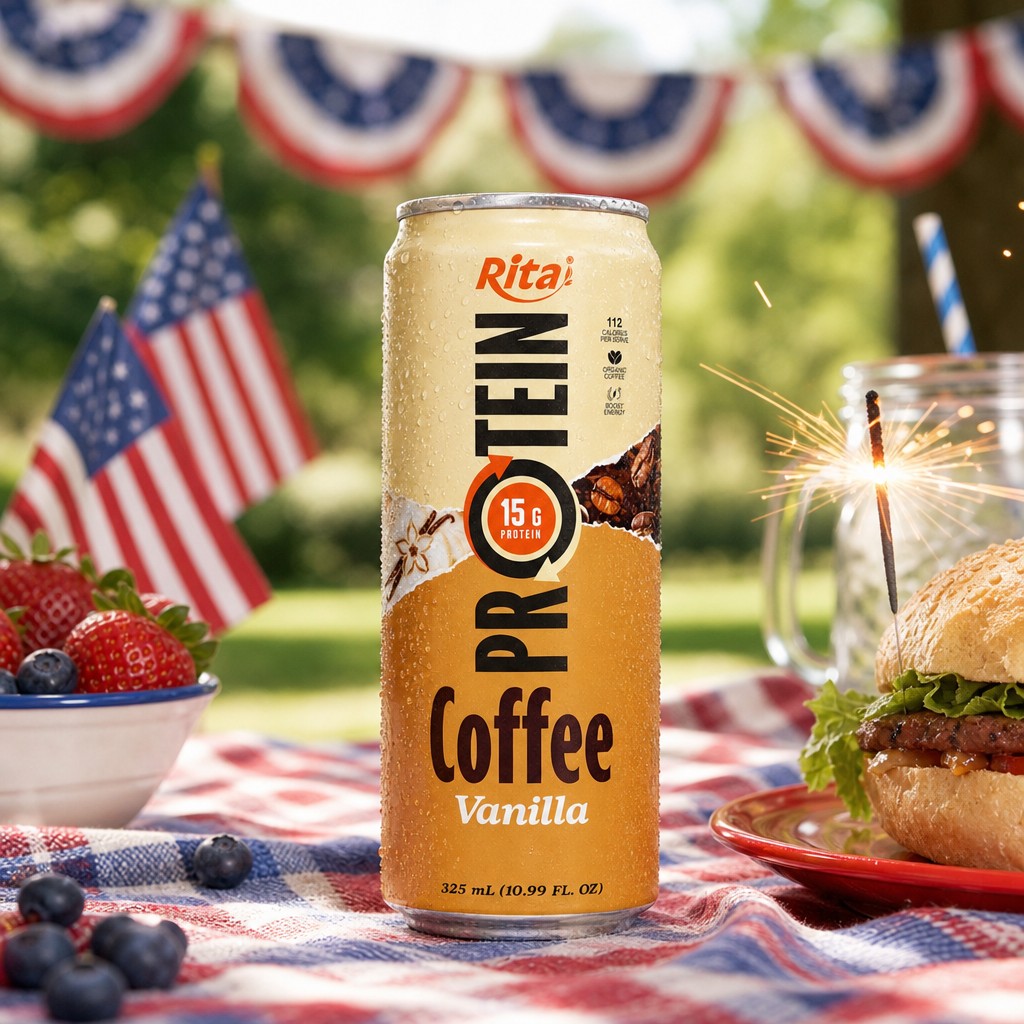
The 325ml can carries a warm gradient moving from creamy beige to golden brown, with stylized roasted coffee beans and vanilla bean pods worked into the artwork. The design language signals sourcing without relying on photography, and the palette separates cleanly from the darker browns typical of espresso cans. Front-of-pack hierarchy is blunt: PROTEIN dominates, the 15g badge anchors the figure, and the RITA mark sits at the base.
Aluminum was chosen partly for practicality. The format stacks, chills quickly, moves well through export routes and accepts full-body printing on all sides, which matters when a brand has to explain a protein figure to a shopper who has never encountered the product before.
From the Highlands to the Can, Coffee Sourcing Behind the Blend
The coffee in this can starts far from any production floor, in highland gardens at harvest.
RITA documents that sourcing route directly: a field visit to Vietnam's coffee gardens during peak harvest season follows cherry picking, drying and the selection decisions that come before any roast is milled for beverage production.
Video from the same sourcing trip, following the crop from garden through processing, is published at https://www.youtube.com/watch?v=F2yJLjUYiuo
Vietnam's robusta belt gives manufacturers a supply base close to port infrastructure, which shortens the distance between harvest timing and can filling. For buyers comparing origins, that proximity usually shows up in lead time and in how consistently a roast profile repeats from shipment to shipment.
Export Reach and Market Outlook for the RTD Coffee Market
For a 325ml protein coffee can, the interesting question is rarely demand. It is logistics.
RITA's export structure is built around volume: more than 50 automated production lines, over 1,200 containers shipped monthly, and shipments recorded across more than 200 countries and territories. For buyers evaluating a ready-to-drink protein coffee program, that infrastructure answers three recurring questions: lead time, consistency of label print across reorders, and the paperwork trail customs teams expect. Pack, shipping and specification details for the Rita Protein Coffee 15g Vanilla 325ml can are published on the product page.
Certification coverage is wide enough for multi-market rollouts without renegotiating standards at every border: BRC, FSSC 22000, Halal Jakim, Halal HCA-GCC, Kosher, ISO, GMP, HACCP and SMETA are all listed by the manufacturer. Buyers entering Halal-sensitive or Kosher-certified shelves can therefore start from a documented base rather than a gap analysis.
Private Label and OEM Pathways for Coffee Brands
Most buyers in this category arrive with a label rather than a finished formula in hand.
RITA, an RITA OEM beverage manufacturer, works across both OEM and ODM engagements, so a client can bring artwork and a target cost, or bring a concept and ask the manufacturer to build the beverage around it. The company's coffee drink portfolio shows the range of formats already in routine production, from canned lattes to milk-based blends, while the full product entry for Rita Protein Coffee 15g documents the specific protein coffee vanilla variant under discussion.
What a launch program typically involves
A typical private-label timeline for a high-protein coffee can moves through defined stages, and the sequence rarely changes even when volumes do.
- Flavor and sweetness matching against an agreed reference sample.
- Label artwork, nutrition panel layout and regulatory review for target markets.
- Sampling rounds with the brand owner or distributor.
- Certification and documentation checks for the destination shelves.
- Trial production, then first commercial shipment.
The protein figure, not the coffee, is usually the longest conversation with a new partner.
Industry Context and Trending Beverage Topics
The wider beverage trade has been busy with format and packaging experiments that look unrelated to canned coffee.
Recent moves across the sector point to the same underlying pressure: brands want more control over how a drink reaches the shopper, and less exposure to single-market shocks. Capacity decisions, packaging pilots and promotional scrutiny are all showing up in trade coverage at once, which makes the case for formats that travel well.
- Shepherd Neame is opening a new brewery focused on its own brand portfolio.
- Varun Beverages plans another factory in India to expand production capacity.
- India's duty-free sugar quota may offer only limited relief for beverage makers.
- Innocent Drinks is piloting edible seaweed pods as a sustainable packaging solution under its NotPlas initiative.
- Sazerac faced criticism for an ice-cream van promotional stunt, drawing scrutiny over its marketing practices.
Two of those threads touch this product directly. Packaging innovation keeps aluminum in the conversation as a proven, fully printable format, while capacity expansions across the trade signal that manufacturers expect volume growth rather than a short cycle. For a private label protein coffee program, both readings favour a can that can be reordered at scale.
Frequently Asked Questions
What is Rita Protein Coffee 15g Vanilla 325ml?
It is a vanilla latte coffee drink packed in a 325ml aluminum can, formulated with whole milk powder, milk protein concentrate, instant coffee powder and natural vanilla latte flavoring, and labelled with 15g of protein per can.
How much caffeine and energy does one can contain?
The manufacturer lists approximately 19mg of caffeine per 100ml and about 183 kcal per 325ml can, which works out to roughly 56 kcal per 100ml.
Which regions does RITA supply this product to?
RITA exports to more than 200 countries and territories, with active discussions covering the United States, Canada, Mexico, Brazil, Argentina, Colombia, Chile, Peru, Ecuador, Venezuela and Central America.
Can the product be ordered under a private label?
Yes. RITA operates OEM and ODM programs covering flavor matching, label artwork, sampling, certification review and production, and the ready-to-drink protein coffee can is available within those programs.
Which certifications does the manufacturer hold?
RITA lists BRC, FSSC 22000, Halal Jakim, Halal HCA-GCC, Kosher, ISO, GMP, HACCP and SMETA among its certifications for exported beverage lines.


 No.08, Thong Nhat Boulevard,