The global beverage industry is entering a decisive decade where packaging choices, ingredient sourcing, and formulation transparency are becoming as important as flavor. Among the products riding this wave is the Yuzu Ginger Electrolyte Water Drink 325ml, a low-sugar hydration beverage that combines zesty yuzu extract with warming ginger essence in a recyclable aluminum can. Market observers note that clean-label positioning and responsible packaging are now standard expectations for buyers across the Americas, from Canada and the United States to Mexico, Brazil, Argentina, Colombia, Chile, Peru, Ecuador, Venezuela, and Central America.
Key Takeaways
- Aluminum can packaging delivers high recyclability rates and shelf stability, aligning with sustainability priorities of retail buyers.
- Low-sugar formulations with electrolyte blends reflect a broader shift toward simple, transparent ingredient decks.
- Private-label and ODM programs allow distributors to launch differentiated hydration drinks without heavy capital investment.
- Certifications such as BRC, FSSC 22000, ISO, HACCP, Halal, and Kosher open doors to regulated import markets.
- Yuzu and ginger flavor pairing offers a premium sensory profile that stands apart from conventional citrus sodas.
Low Sugar Hydration Beverage Gains Traction Across the Americas
Retail buyers across the Americas are re-evaluating their hydration portfolios, and low-sugar formats are climbing fast. The low sugar hydration beverage category has moved from niche to mainstream shelf space in a remarkably short time. Consumers scanning cooler doors now compare sugar grams per 100 ml before price, and the Yuzu Ginger Electrolyte Water Drink answers that scan with approximately 4.5 g of sugar and roughly 26 kcal per 100 ml.
The product is offered in a compact 325 ml aluminum can, a format favored by convenience chains and vending operators for its portability and rapid chill performance. For distributors evaluating the Yuzu Ginger Electrolyte Water Drink 325ml Low Sugar Hydration Beverage, the combination of a familiar can format and a novel flavor story reduces shelf-education costs.
Market research consistently shows that hydration occasions are expanding beyond sports and fitness into daily desk-side, commute, and travel moments. This widening of occasions benefits beverages that are light, moderately carbonated, and easy to consume in short sips. A crisp acidity of around pH 4.1 and a Brix level near 9.4 give the drink a refreshing bite without the heaviness associated with full-sugar sparkling drinks.
Flavor Positioning That Resonates With Modern Shoppers
Yuzu occupies an interesting space in global flavor culture. It is recognizably citrus yet distinctly aromatic, carrying floral and tart notes that standard lemon or lime cannot replicate. When paired with ginger essence, the profile gains a gentle warmth on the finish. The result is a drink that feels invigorating on the first sip and soothing on the last, a duality that appeals to consumers who want complexity without sweetness overload.
Clean-label expectations reinforce this positioning. The formulation uses purified water, natural yuzu extract, ginger essence, and an electrolyte blend of sodium, potassium, calcium, and magnesium, with no artificial colors or flavors. Ingredient decks of this length are increasingly the benchmark for mainstream retail listings in North and South America.
Sustainable Packaging and Clean Label Formulation Drive Buyer Interest
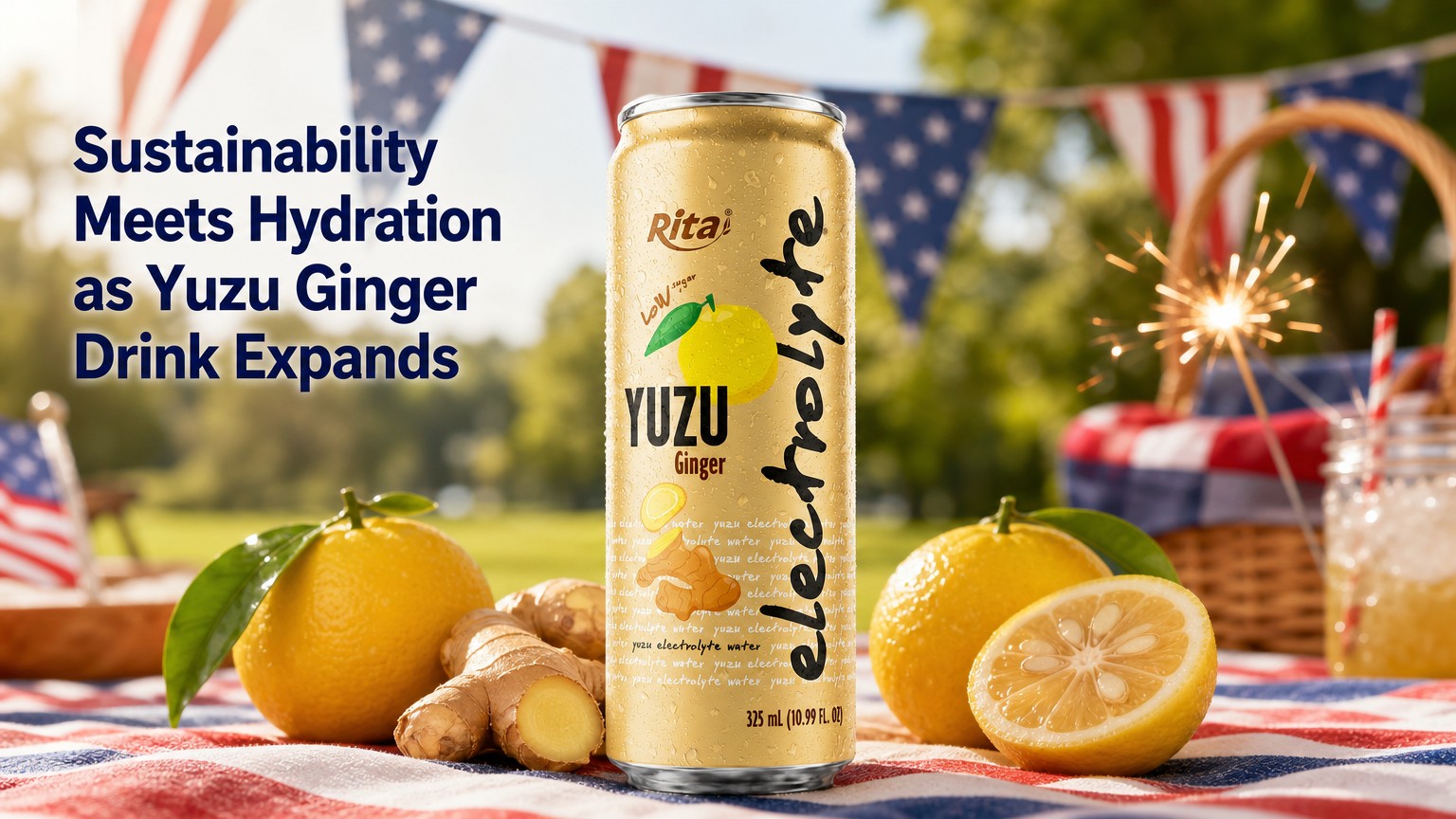
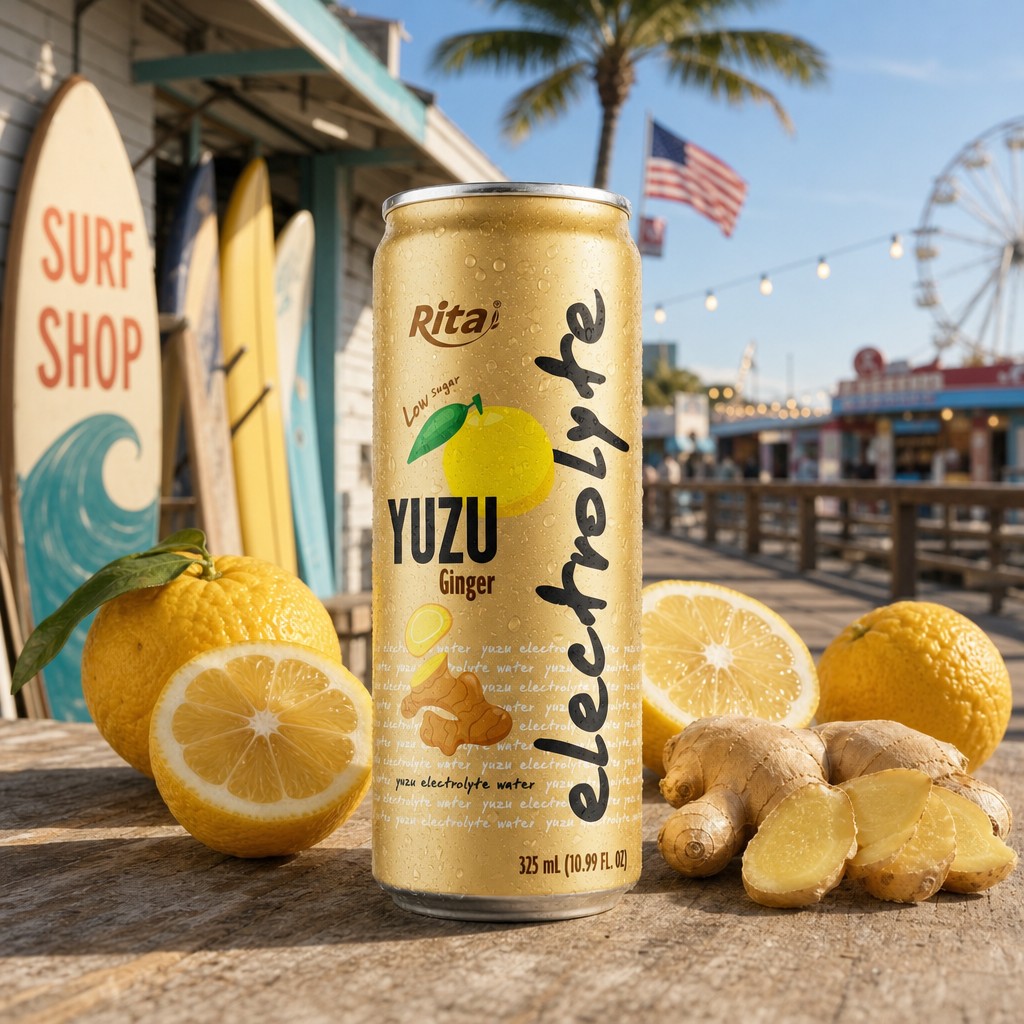
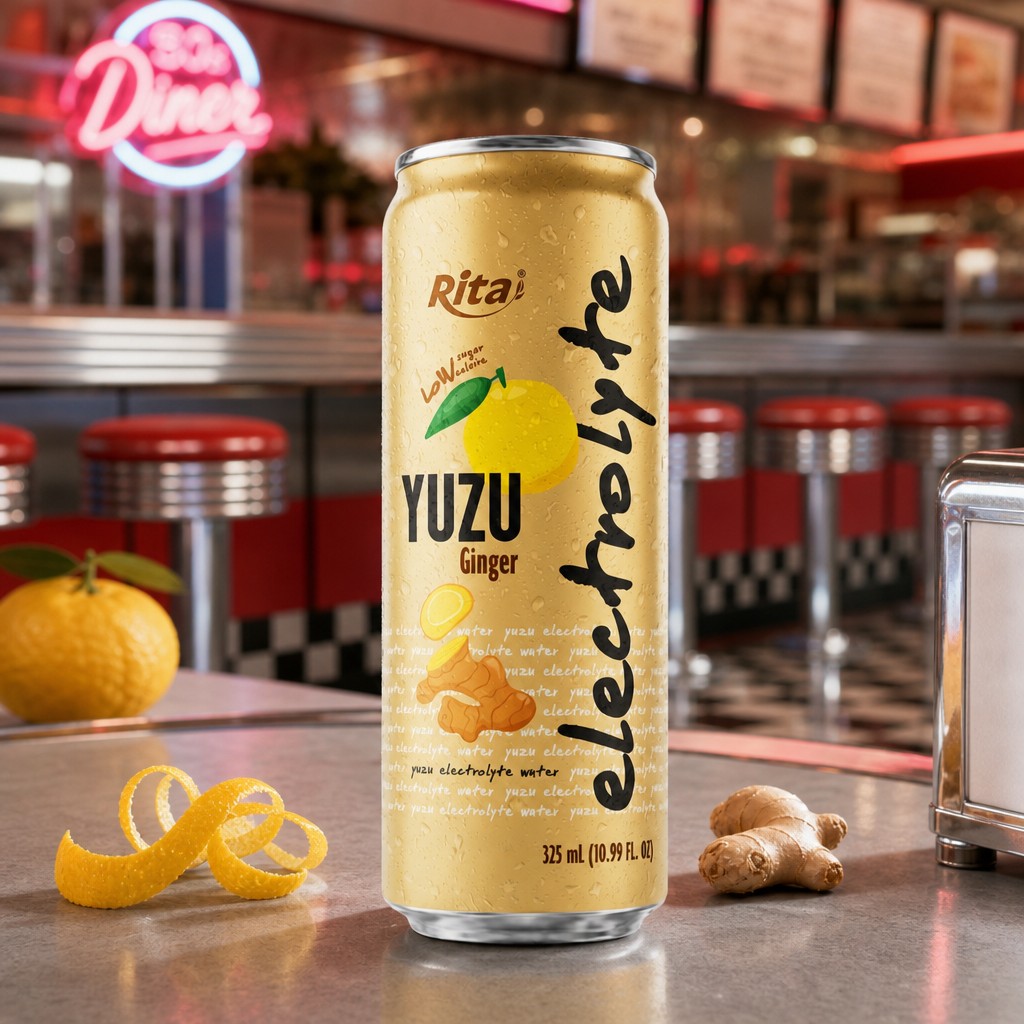
Packaging is no longer a back-office decision. Aluminum cans are among the most recycled beverage containers worldwide, and their infinite recyclability without loss of quality is a story buyers can tell downstream to their own customers. The golden-yellow can design of the Yuzu Ginger Electrolyte Water Drink, illustrated with fresh fruit motifs and condensation droplets, reinforces a natural visual cue at the point of sale.Shelf stability is another practical advantage. A 24-month shelf life when stored in cool, dry conditions means importers can plan container-level shipments without the urgency that accompanies shorter-dated products. Aluminum's barrier properties protect the delicate yuzu aroma and ginger notes through long transit legs from Ho Chi Minh Port to destinations across the Americas.
For brands considering portfolio refreshes, the drink sits comfortably alongside existing soft drink ranges without cannibalizing core SKUs. Its electrolyte content and low-sugar profile give it a distinct usage occasion, while the citrus-ginger flavor bridges the gap between soda and functional hydration.
Electrolyte Blend and Sensory Details Worth Noting
The electrolyte blend includes four familiar minerals: sodium, potassium, calcium, and magnesium. These are presented as part of the beverage's composition rather than as a marketing claim, which suits buyers in jurisdictions with strict labeling rules. Light carbonation adds texture, and the natural citrus aroma carries through from the can opening to the final sip.
- Volume: 325 ml aluminum can, single-serve format
- Sugar: approximately 4.5 g per 100 ml
- Energy: roughly 26 kcal per 100 ml
- Acidity and sweetness: pH approximately 4.1, Brix approximately 9.4
- Shelf life: 24 months under cool, dry storage
These specifications make the product straightforward to list in retailer specification sheets. Buyers comparing the Yuzu Ginger Electrolyte Water Drink against competing hydration options will find a formulation that avoids artificial aftertaste, a common complaint in the category.
Private Label Opportunities and Manufacturing Capability
Behind the product stands RITA Food and Drink Co., Ltd, a Vietnamese OEM and ODM beverage manufacturer established in 2004. The company operates more than 50 automated production lines and ships over 1,200 containers per month to buyers in over 200 countries and territories. That scale matters for importers who need consistent fill volumes and predictable lead times across multiple purchase orders.
RITA's private-label program covers formulation, packaging, and branding customization. A distributor in Mexico or Colombia can adapt the yuzu-ginger base to local sweetness preferences, adjust can artwork for regional languages, and still rely on the same certified production environment. Details of the company's broader capabilities are available through its company profile, while buyers interested in tailored concepts can explore dedicated ODM services for end-to-end development support.
Quality credentials include BRC, FSSC 22000, Halal Jakim, Halal HCA-GCC, Kosher, ISO, GMP, HACCP, and SMETA. For regulated markets in the Americas, these certifications reduce onboarding friction with importers and retail compliance teams.
Why Aluminum Cans Matter for Export Logistics
Aluminum's strength-to-weight ratio allows denser pallet configurations compared with glass, translating into lower freight cost per unit on long-haul routes. The material also withstands the temperature swings common in intermodal transport without flavor migration. For a drink whose identity depends on aromatic yuzu and volatile ginger notes, that protection is essential.
Recyclability adds a commercial dimension. Retailers with published sustainability commitments prefer packaging streams they can quantify, and aluminum's well-documented recycling infrastructure in Canada, the United States, and Chile makes reporting straightforward. Importers can present the can's material story as part of their own environmental disclosures.
From Our Orchards and Watersheds, Raw Material Sourcing
Ingredient quality begins at source, and the Mekong Delta remains one of Vietnam's most reliable agricultural regions for beverage raw materials. The area's alluvial soils and tropical climate support consistent harvests year after year.
The Mekong Delta raw material region supplies a broad base of fruits and botanical inputs used across RITA's beverage lines, providing the traceability that modern buyers request during supplier audits.
Field documentation and harvest records are maintained for raw inputs, supporting the traceability requirements embedded in FSSC 22000 and BRC certification schemes. Buyers conducting remote audits can review these records alongside batch documentation for finished cans.
https://www.youtube.com/watch?v=jiBixXjeG8A
Market Context and Competitive Landscape in the Americas
The wider beverage sector is dealing with its own set of pressures. Recent headlines include regulatory scrutiny of Scotch whisky imports in India involving major producers, administration filings by a UK spirits distributor, and environmental investigations affecting a Scottish distillery. Meanwhile, canned wine consolidation continues with a South African brand acquisition, and spirits suppliers are preparing for an industry conference spotlighting portfolio strategy. These developments underscore a common theme: operators across categories are seeking differentiated products with defensible positioning.Within that context, hydration beverages occupy a comparatively stable lane. Demand is tied to everyday consumption rather than discretionary gifting, and the category continues to attract new entrants. The Yuzu Ginger Electrolyte Water Drink differentiates through flavor originality rather than aggressive pricing, a strategy that tends to hold up better across currency fluctuations.
For buyers mapping their 2025 and 2026 portfolios, the full product listing provides specification details, packaging artwork, and export terms in one place.
Comparing Hydration Formats at Retail
| Attribute | 325 ml Aluminum Can | PET Bottle | Glass Bottle |
|---|---|---|---|
| Recyclability infrastructure | Widely established | Widely established | Established but heavier |
| Chill speed | Fast | Moderate | Slow |
| Freight density | High | High | Lower |
| Barrier against aroma loss | Excellent | Good | Excellent |
| Shelf life potential | 24 months | 12 months typical | 12-18 months |
The comparison illustrates why aluminum has become the default for long-route hydration exports. It balances sensory protection, logistics efficiency, and end-of-life recovery in a single format.
Outlook for Low Sugar Hydration in Coming Seasons
Looking ahead, several signals suggest the category will keep expanding. Retailers are allocating more cooler doors to hydration and electrolyte drinks, private-label programs are broadening beyond water into flavored variants, and flavor innovation remains the primary driver of trial purchases. Yuzu and ginger together offer a story that sales teams can tell in a single sentence, which matters in crowded category reviews.
Sustainability considerations will continue to influence packaging decisions. Aluminum's recyclability, combined with the material's proven performance on export routes, positions the 325 ml can as a practical answer to both operational and reputational requirements. Buyers who need a clean-label, low-sugar hydration option with a distinctive flavor profile can review the Yuzu Ginger Electrolyte Water Drink specifications and request samples through the product page.
As portfolios evolve across the Americas, products that combine transparent formulations, responsible packaging, and a memorable taste are likely to earn repeat listings. The Yuzu Ginger Electrolyte Water Drink enters that conversation with clear specifications, certified production, and a flavor profile designed to stand out on the shelf.
Frequently Asked Questions
What is the sugar content of the Yuzu Ginger Electrolyte Water Drink?
The drink contains approximately 4.5 grams of sugar per 100 ml and roughly 26 kcal per 100 ml, placing it in the low-sugar segment of the hydration category.
What packaging does the product use?
It is filled in a 325 ml aluminum can with a golden-yellow design featuring fresh fruit illustrations. Aluminum provides strong aroma protection and is widely recyclable across retail markets.
Which certifications cover production?
Production is carried out under BRC, FSSC 22000, ISO, GMP, HACCP, Halal Jakim, Halal HCA-GCC, Kosher, and SMETA certifications, supporting compliance reviews with importers and retail chains.
Is private-label customization available?
Yes. RITA Food and Drink Co., Ltd offers OEM and ODM services covering formulation adjustment, can artwork, and branding, allowing distributors to tailor the product to regional preferences.
What is the shelf life of the drink?
The product carries a 24-month shelf life when stored in cool and dry conditions, which supports long-haul export planning and staged inventory replenishment.


 No.08, Thong Nhat Boulevard,